Residential Airparks: Flying Away Home
/Few concepts so vividly illustrate the difference between science fiction and real life as flying cars. More than a century ago, “pulp” and science fiction magazines first introduced the idea to the public. In the 1960s, “The Jetsons” soared merrily around their stylish metropolis in the sky, while the characters in Philip K. Dick’s Do Androids Dream of Electric Sheep? piloted hovercraft around grittier districts.

CGI Flying CAR. Photo Credit: Donald Iain Smith, Getty Images
A few decades later, “Back to the Future” turned its gull-winged DeLorean into a flying car thanks to a “Mr. Fusion” add-on. Futuristic movies such as “Blade Runner” (an adaptation of Dick’s book) and the “Star Wars” saga made personal flying vehicles seem commonplace. By the actual start of the 21st century, though, the most notable reference to flying cars was an ad for IBM in which Avery Brooks, best known as a commander in “Star Trek: Deep Space Nine,” told viewers that they should be satisfied with Web connectivity instead of personal flight.
Today, the Internet is everywhere, but flying cars remain a daydream. The energy needs, safety concerns and logistical complications that the concept would require are daunting, and regulatory bodies such as the U.S. Federal Aviation Administration have more than enough to do in overseeing existing flight technology. However, for those looking to live in communities based around air travel rather than automobiles, there is an option – residential airparks, or neighborhoods centered around runways rather than roads. If you’re tired of a wheel-centered lifestyle and want more time in the air, read on.
From Dogfights to Airparks
Fly-in communities trace their origin to the rapid expansion of aircraft use in World War II. As air warfare became key to victories, the U.S. trained numerous pilots and built military airfields. Though a weary world obviously welcomed peace, it left the U.S. with a surplus of both infrastructure and pilots for smaller aircraft. FAA predecessor Civil Aeronautics Administration suggested a new use for both – residential airparks.
In October 1946, William and Doris Smilie filed a plan with Fresno County in California to create a subdivision with residential lots centering around a runway. Instead of garages, residents would have hangars, with low street signs, setbacks, specialized mailboxes and other features making an aviation-centered neighborhood feasible. Permanent easements would ensure runway access for residents.
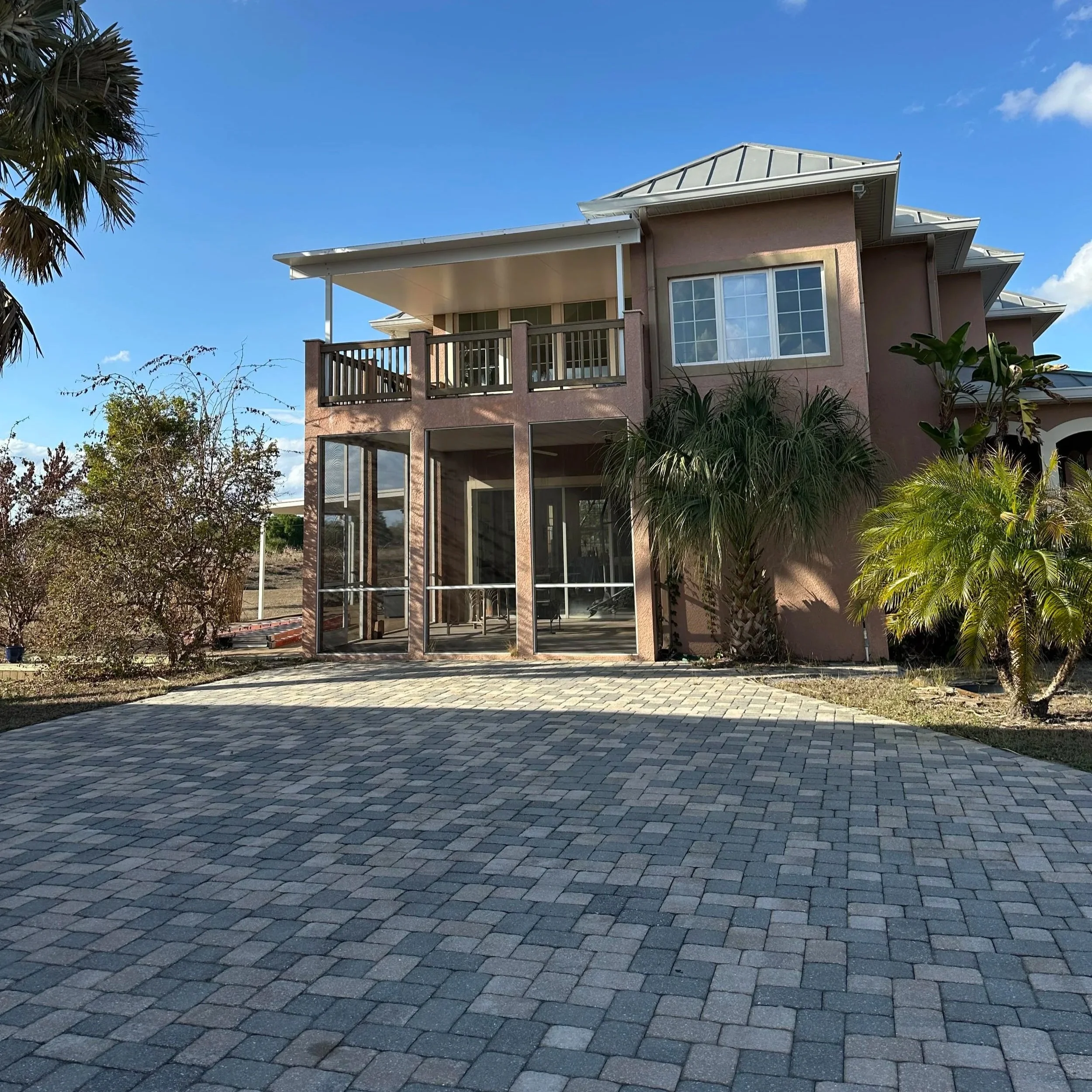
Home in Sky Manor Airpark in Labelle, Florida. Photo courtesy John Kusianovich
The first home went up in 1952, and California adapted its vehicle code about a decade later to allow aircraft to taxi along streets in residential airparks. The Smilies – the first homeowners in Sierra Sky Park – served as consultants for future fly-in communities.
In the modern day, the Living With Your Plane directory of residential airparks lists more than 700 total worldwide. While most of them are in the U.S., there are a handful elsewhere – Canada, Costa Rica, Sweden, even Australia. Florida and Texas appear to be the U.S. states with the most airparks, with Spruce Creek near Daytona Beach, FL holding the accolade of the largest fly-in community with more than 1,000 acres and 5,000+ residents.
Home on the Airstrip
In 2026, fly-in communities may offer more than just a runway and hangar space. Spruce Creek, for example, includes a golf course that extends throughout the community and an adjacent country club with tennis courts and a pool. On the aviation side, residents may have access to jet fuel refueling stations, visual aids such as windsocks and possibly even private-use airports. (There are fly-in communities with “through the fence” access to commercial airports, but the U.S. government now bars establishing new access agreements and regulates those already in place.)
However, residential airparks can vary greatly by size and services. While some (including, at least for a time, actor Johnactor John TravoltaTravolta) prefer the size of a Spruce Creek, others want something smaller and more secluded. As one example of the latter, Sky Manor Airpark near LaBelle, Florida consists of only 20 residential lots…with sale limited to those with a pilot’s certificate.
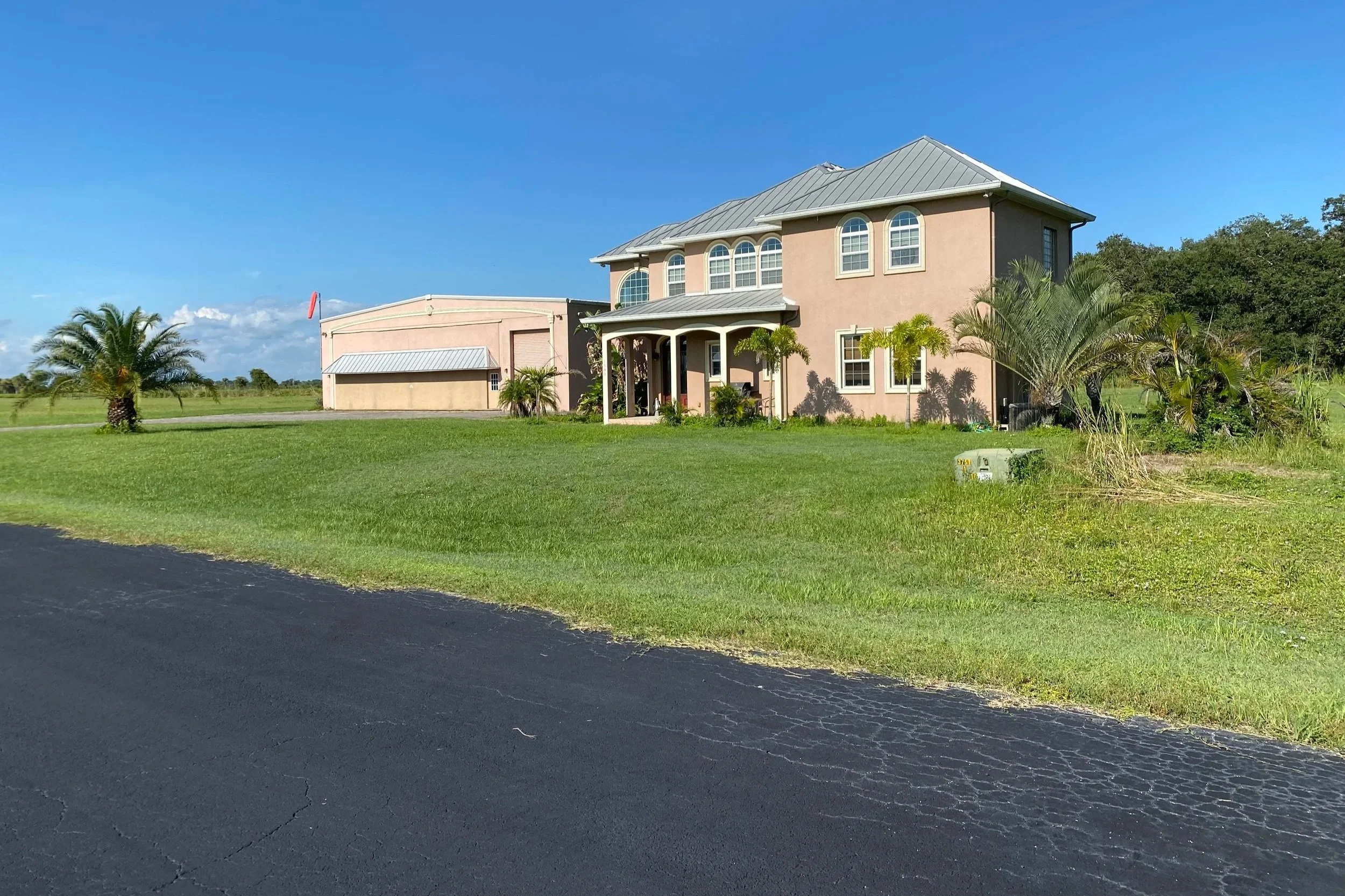
Home in Sky Manor Airpark in Labelle, Florida. Photo courtesy John Kusianovich
Sky Manor resident John Kusianovich found both the air travel capacity and the smaller size appealing when he was seeking a home several years ago, after four decades piloting aircraft. “I wanted to be somewhere where an airplane would be next to my house rather than driving 30 minutes to an airport,” he says. He ended up with an acre of land holding a three-bedroom house and a 5,000-square-foot hangar – a perfect fit for both him and his Cessna 182.
Sky Manor’s runway is about 4,000 feet long, with a turf/grass surface. There’s no official airport – residents radio each other to coordinate takeoffs and landings. As with many fly-in communities, airplanes have the right of way on surface area. “Cars and airplanes don’t get along. With that spinning propeller, airplanes can be dangerous,” Kusianovich mentions. “If you’re taxiing to the runway and there’s a car, they have to get out of the way.”
One concept that ports over to residential airparks from car-based neighborhoods is a homeowners’ association. Fly-in communities typically have to have insurance on their airstrips, something that HOA fees can fund. Runways such as the one at Sky Manor must be mowed, which HOAs can help coordinate. “We have our annual meeting every year and talk about all types of stuff. Our biggest issue right now is construction on the road,” Kusianovich says.
Size Matters
Not every aircraft can be accommodated at a given fly-in community. Airparks with shorter and/or unpaved runways are often limited to lighter planes such as single-engine piston models. Those with longer, paved runways can usually handle turboprops and mid-sized private jets. The biggest airparks offer landing space for large-cabin business jets (though Spruce Creek balked at permitting Travolta’s Gulfstream II back in the 1990s).
But plane size isn’t the only factor determining whether a residential airpark may work for an airplane owner. Typically, fly-in communities are, unsurprisingly, heavily focused on aviation – and if you view your plane as a useful tool rather than a guiding interest, you may not find the lifestyle compatible. “These communities cater to aviation enthusiasts,” says aviation real estate company AV8 Realty. “Neighbors bond over their shared interests, swap flying stories and often collaborate on aviation-related projects.”
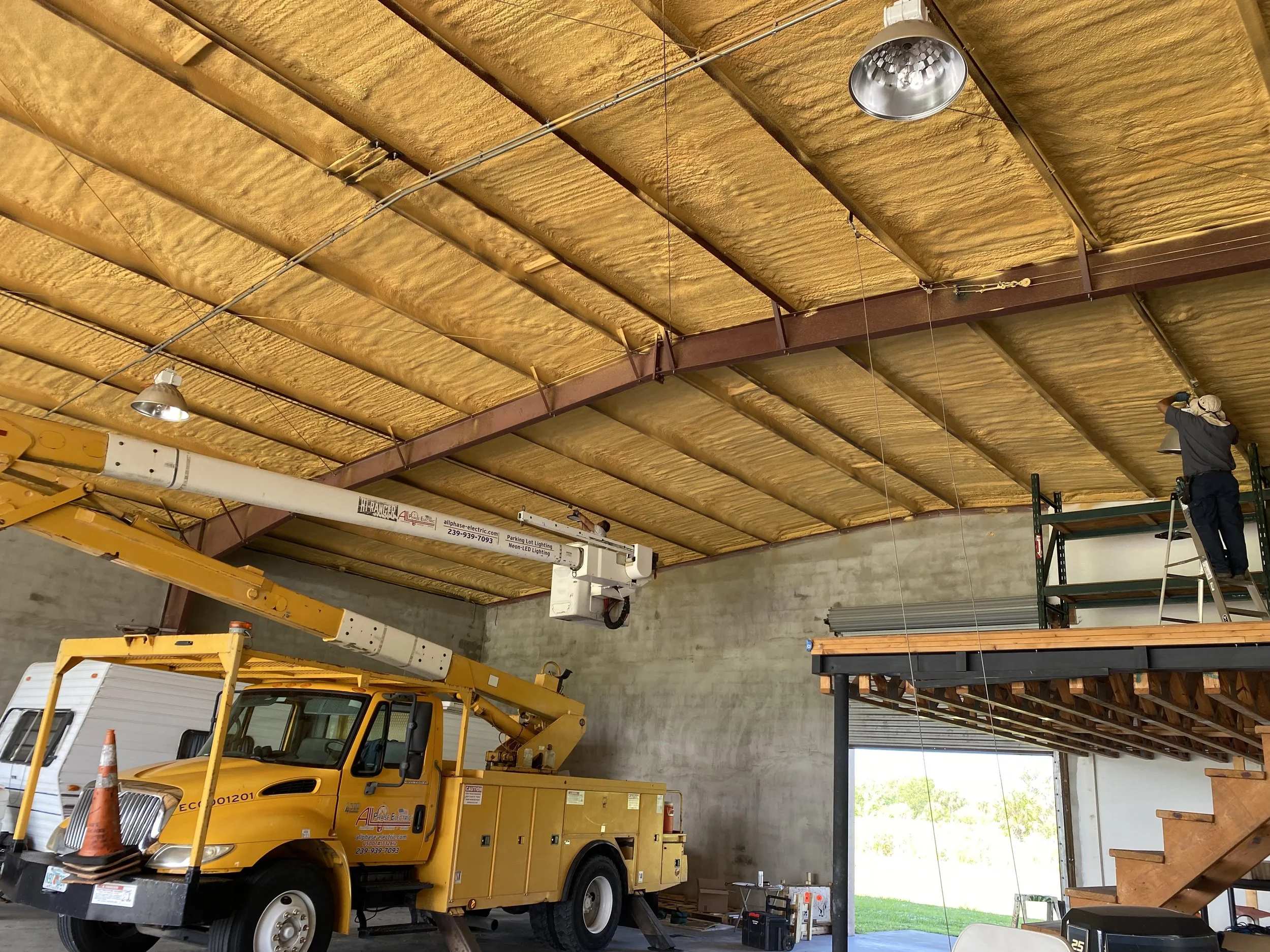
HANGAR SPACE in Sky Manor Airpark in Labelle, Florida. Photo courtesy John Kusianovich
However, if you’re up for just about any excuse to fly, a residential airpark offers a lot of opportunities. Kusianovich shares part of his hangar space with his neighbors, and they often like company in the air. “Whenever I see them come out, they ask if I want to fly with them, and I say yes. It’s very handy,” he says.
Airpark inhabitants should be prepared to deal with some insurance complications, Kusianovich cautions. “Some insurance companies are afraid of hangars because there are airplanes in there with gas in them,” he says. “But for a guy, a huge building is great – you can put all sort of stuff in there. There are three doors, so getting in and out is no problem for either planes or cars.”
Flying Into the Future
While airparks tend to be located away from areas with expensive urban real estate, a recent analysis by Realtor.com indicated that home listings including common airpark keywords were priced at a premium of about 30% over those without. This price hike can make establishing new airparks more complicated in areas where land is already at a premium.
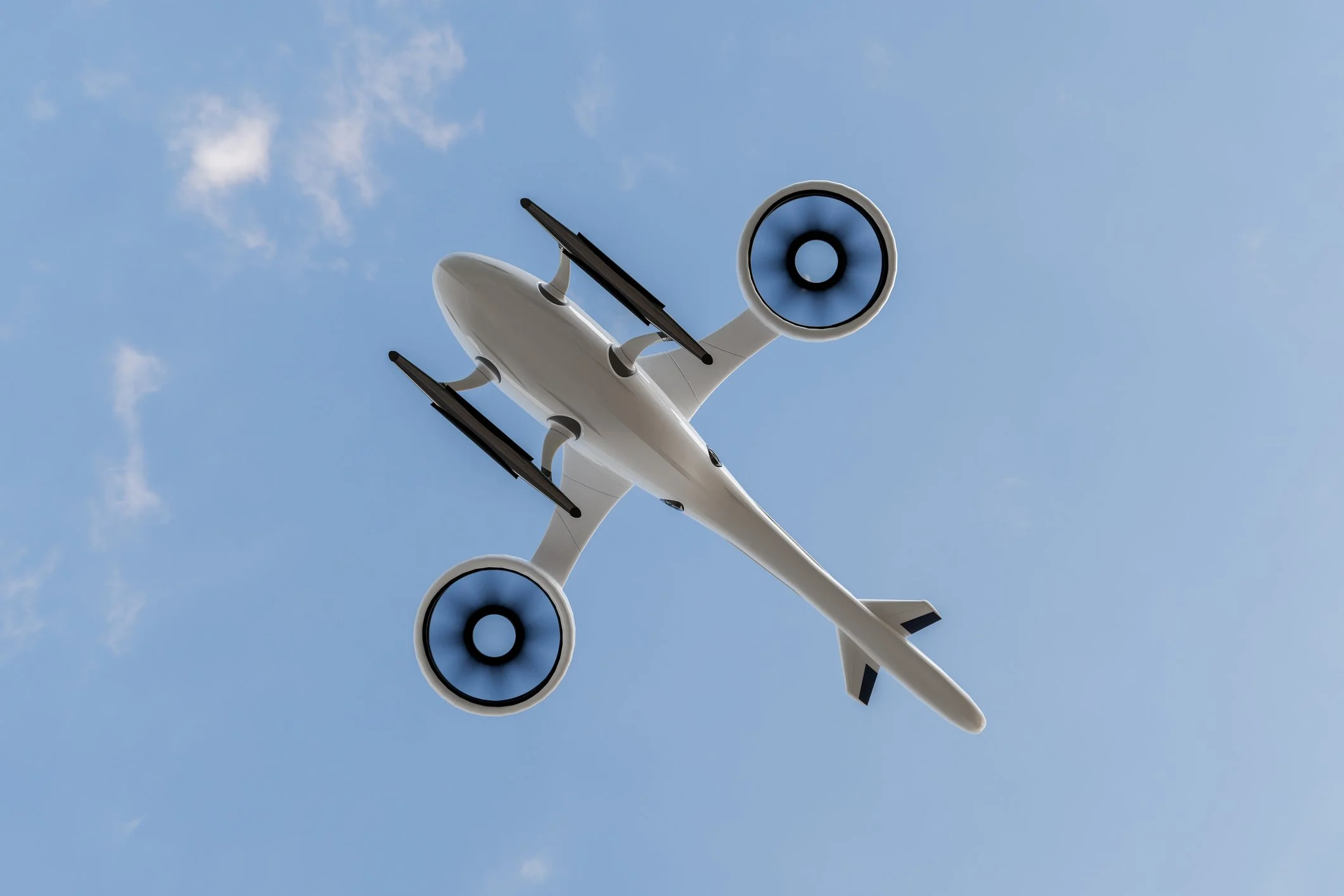
Modern eVTOL Aircraft from below. Photo credit: Osakawayne studios, Getty Images
Noise concerns are another factor that may limit airpark growth, especially in population-dense states and countries – those without planes may prefer to live away from takeoffs and landings. Electric vertical takeoff and landing (eVTOL) aircraft and electric planes may present alternative paths for expansion; however, even when those move from concept to reality, airparks would need to provide specialized pads and other infrastructure for takeoff, landing and charging facilities.
For now, though, thousands of current fly-in community residents are enjoying the perks as they currently exist. “If you want to go on a trip, you go out to the hangar in the morning, pull the plane out and fly to your destination,” Kusianovich says. “When you come back, you land, taxi up to your hangar, shut the motor down and you’re done. If you have an airplane and you fly regularly, you can’t beat it.”