Travel 101: Egypt
/The pyramids of Giza have stood for more than 4,500 years, the Nile still cuts through the country as the lifeline it has always been, and the artifacts of the pharaohs continue to surface new stories even now. For a first-time visitor or a seasoned traveler returning for another look, Egypt in 2026 offers something it hasn't in decades: a genuinely new centerpiece.
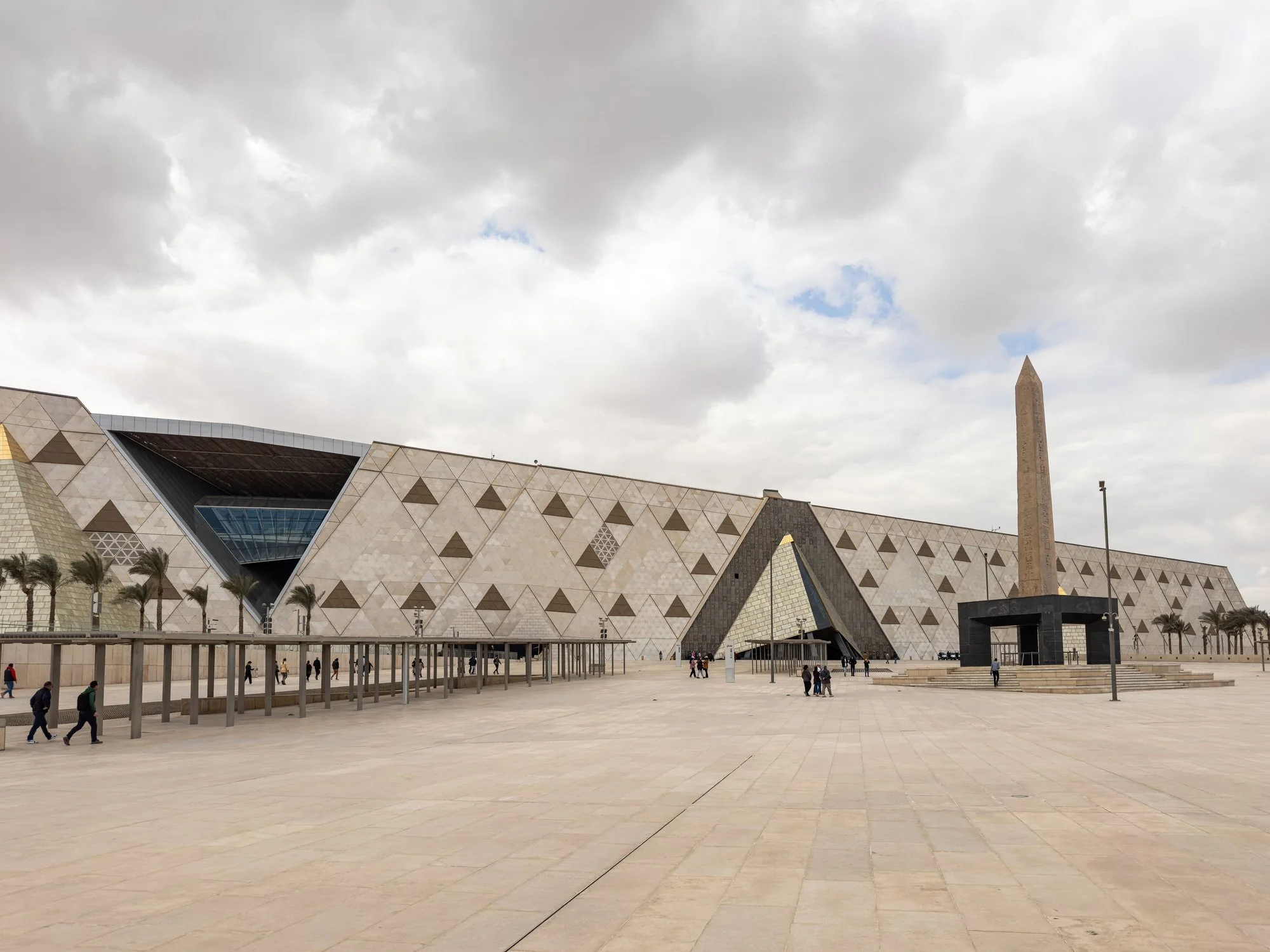
The Grand Egyptian Museum in Giza, Egypt. Photo Credit: Wirestock, Getty Images
A Timeless Land, Newly Revealed
The Grand Egyptian Museum opened in full on November 1, 2025, after more than two decades of construction and delay. Positioned about two kilometers from the pyramids on the Giza plateau, the museum spans roughly 5.2 million square feet, making it the largest institution in the world dedicated to a single civilization. Its centerpiece is the complete Tutankhamun collection, all 5,398 pieces displayed together for the first time since Howard Carter's 1922 discovery. Designed by Heneghan Peng Architects, the building's alabaster facade filters desert light into a six-story Grand Hall, where a 3,200-year-old statue of Ramesses II greets visitors beneath a sunlit roof. Timed entry is required and tickets, priced around $30 for foreign adults, must be booked online in advance since on-site sales have ended. Without exaggeration, it is the most significant addition to Egypt's cultural landscape in a generation, and it has reshaped how a modern trip through the country should be planned.
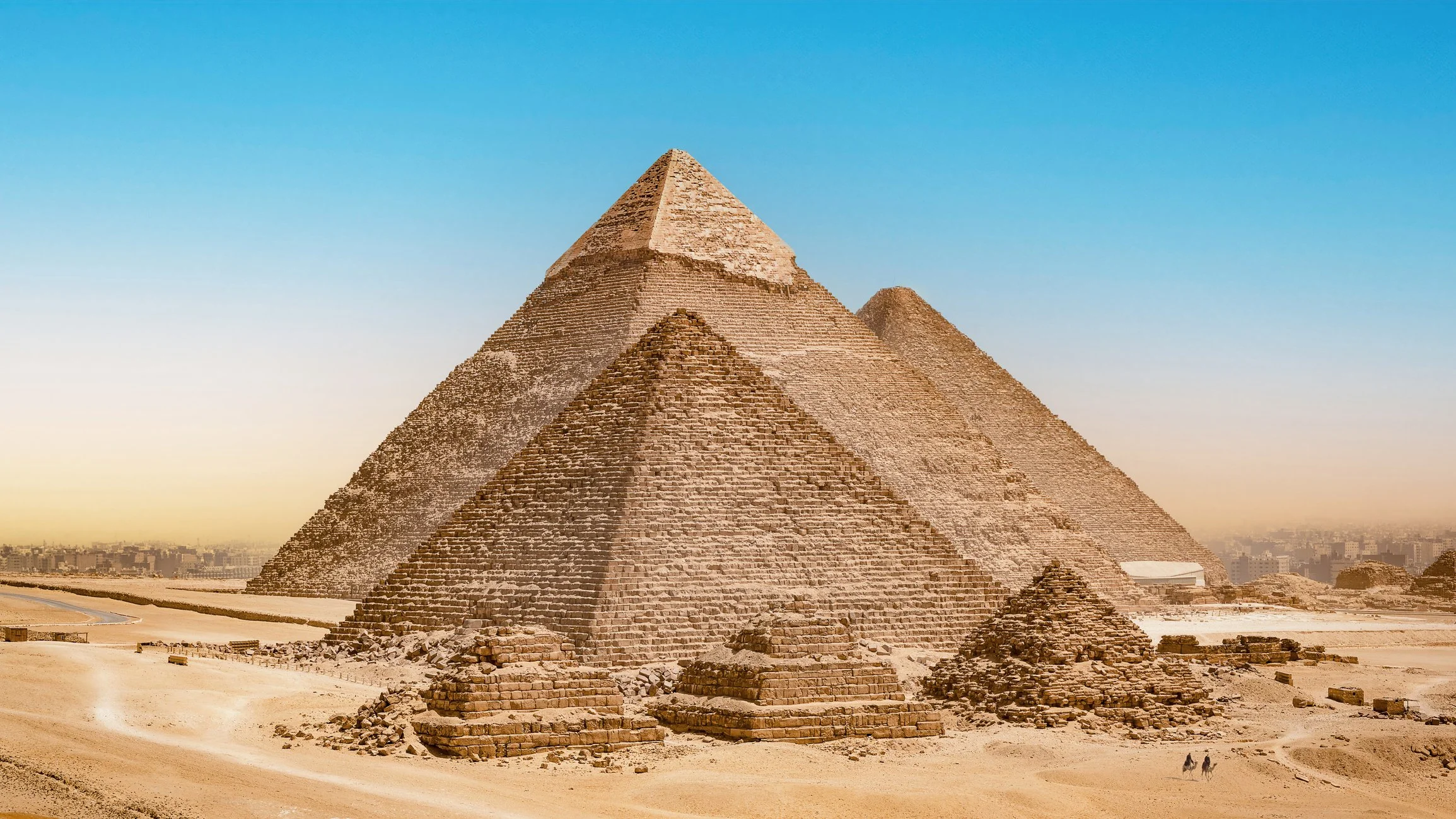
Tye Pyramds of GIZA, EGYPT. Photo Credit: Nick Brundle Photography, Getty Images
Timing still matters. Cairo, Luxor, and Aswan see the mildest weather between October and April, when daytime temperatures settle into the 70s and 80s Fahrenheit and evenings turn cool enough for a jacket. Summer travel is possible and considerably less crowded, but Upper Egypt heat climbs past 100 degrees and is best for early-morning sightseeing. American travelers need a visa for entry, available as an e-visa in advance or on arrival at Cairo International Airport for a modest fee, and a passport valid for at least six months.
Arriving in Style
Cairo International Airport (HECA) handles private and executive aviation through Hall 4, a dedicated general aviation terminal operated independently from the commercial concourses. Smart Aviation, based at the field since 2007, runs the primary FBO beside Hall 4, offering customs, immigration, and baggage handling on-site so arriving passengers clear formalities without ever entering the main terminal. For a country where the drive from the airport to the pyramids can take well over an hour, depending on traffic, the ability to land, clear customs, and be on the road within minutes is no small convenience. It is the difference between a trip that starts with jet lag and delay, and one that starts with a clear view of the Nile from the car window.
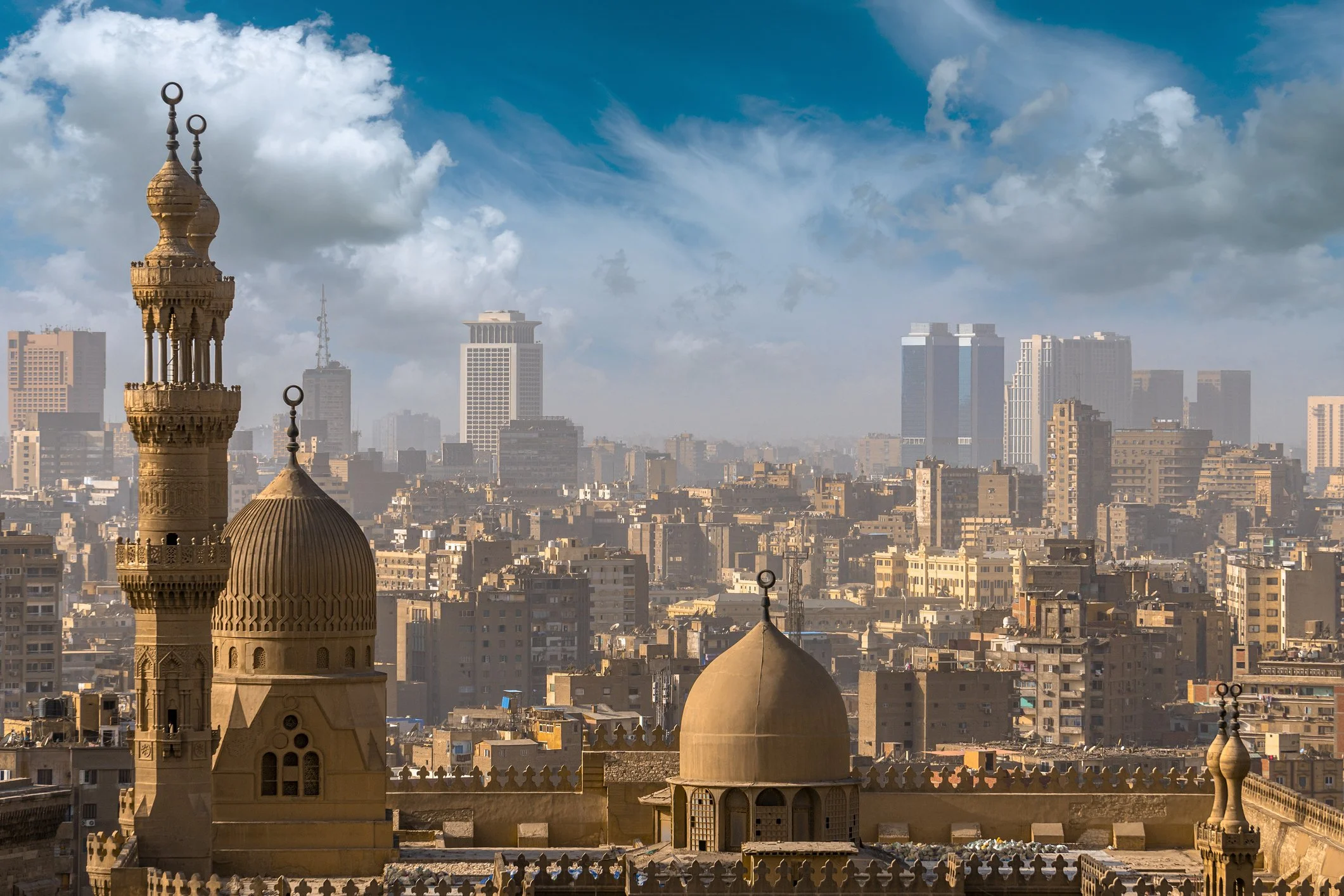
View of the Mosques of Sultan Hassan and Al-Rifai in Cairo. Photo Credit: ugurhan, Getty Images
Where to Stay
Egypt's two ends of a classic itinerary, Cairo and Aswan, each hold a hotel that has become inseparable from the destination itself.
The Four Seasons Hotel Cairo at Nile Plaza rises 30 stories above the Corniche in Garden City, a neighborhood of Belle Époque and Art Deco mansions along the east bank of the Nile. Designed by WZMH Architects, the tower is clad in granite and crowned by a mansard roof, with a seven-story central arch forming the entrance. Select suites feature interiors by Pierre Yves Rochon, blending Art Deco refinement with contemporary Egyptian art. Guest rooms look out over the river toward the Citadel and, on a clear day, the Great Pyramid in the distance. The hotel features nine restaurants and a rooftop pool, and its Garden City location puts the Egyptian Museum and downtown Cairo within easy reach.
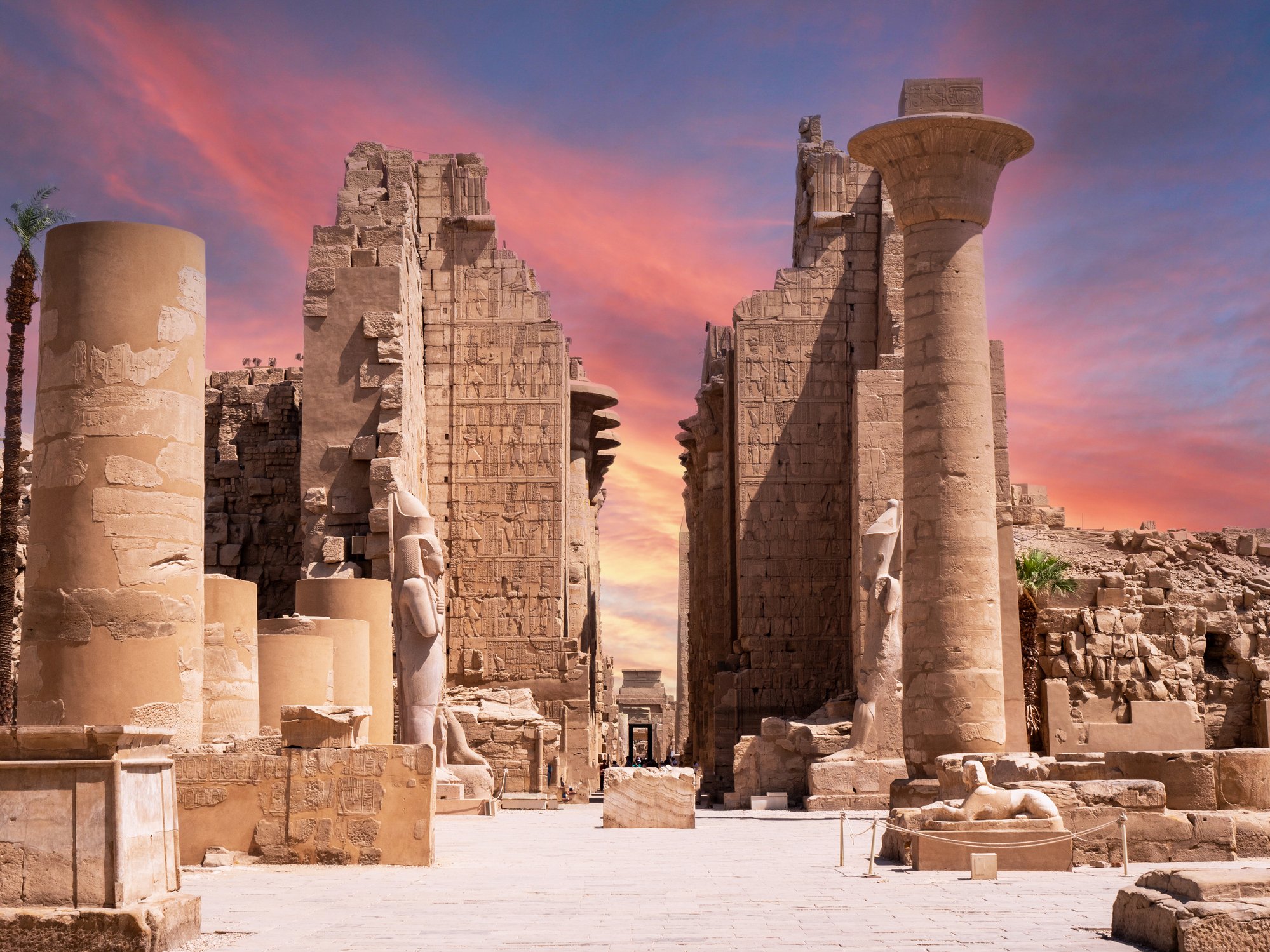
The Karnak Temple in ASWAN, egypt. Photo Credit: Craig Hastings, Getty Images
In Aswan, the Sofitel Legend Old Cataract has occupied its perch above the Nile's first cataract since 1899. Designed by architect Henri Favarger and built for Egypt's King Fouad, the hotel is a Moorish Revival landmark of scarlet-and-white interiors, with its main hall topped by a 23-meter dome. Winston Churchill, Howard Carter, and Princess Diana have all stayed here, but its most famous guest remains Agatha Christie, who wrote much of Death on the Nile from the hotel's terrace in 1937. The Agatha Christie Suite is open for tours when unoccupied, and the terrace where she is said to have worked still serves afternoon tea and sunset cocktails over the river. Its position near Philae Temple also makes it a natural base for the drive to Abu Simbel.
Where to Eat
Cairo's dining scene made international headlines in February 2026, when Khufu's was named the number one restaurant in the Middle East and North Africa at the region's 50 Best Restaurants awards, the first time an Egyptian restaurant has topped the list. Set within the Giza pyramid complex, with an unobstructed view of the Great Pyramid from the dining room, Khufu's serves contemporary Egyptian cooking from executive chef Mostafa Seif, who won Top Chef Arabia in 2017 and built his menus around the rural cuisine of his upbringing. Part of the Pier 88 group, the restaurant also offers a dedicated vegetarian menu alongside rotating tasting options. A meal here beneath the floodlit pyramid at night has become one of the region's defining dining experiences.
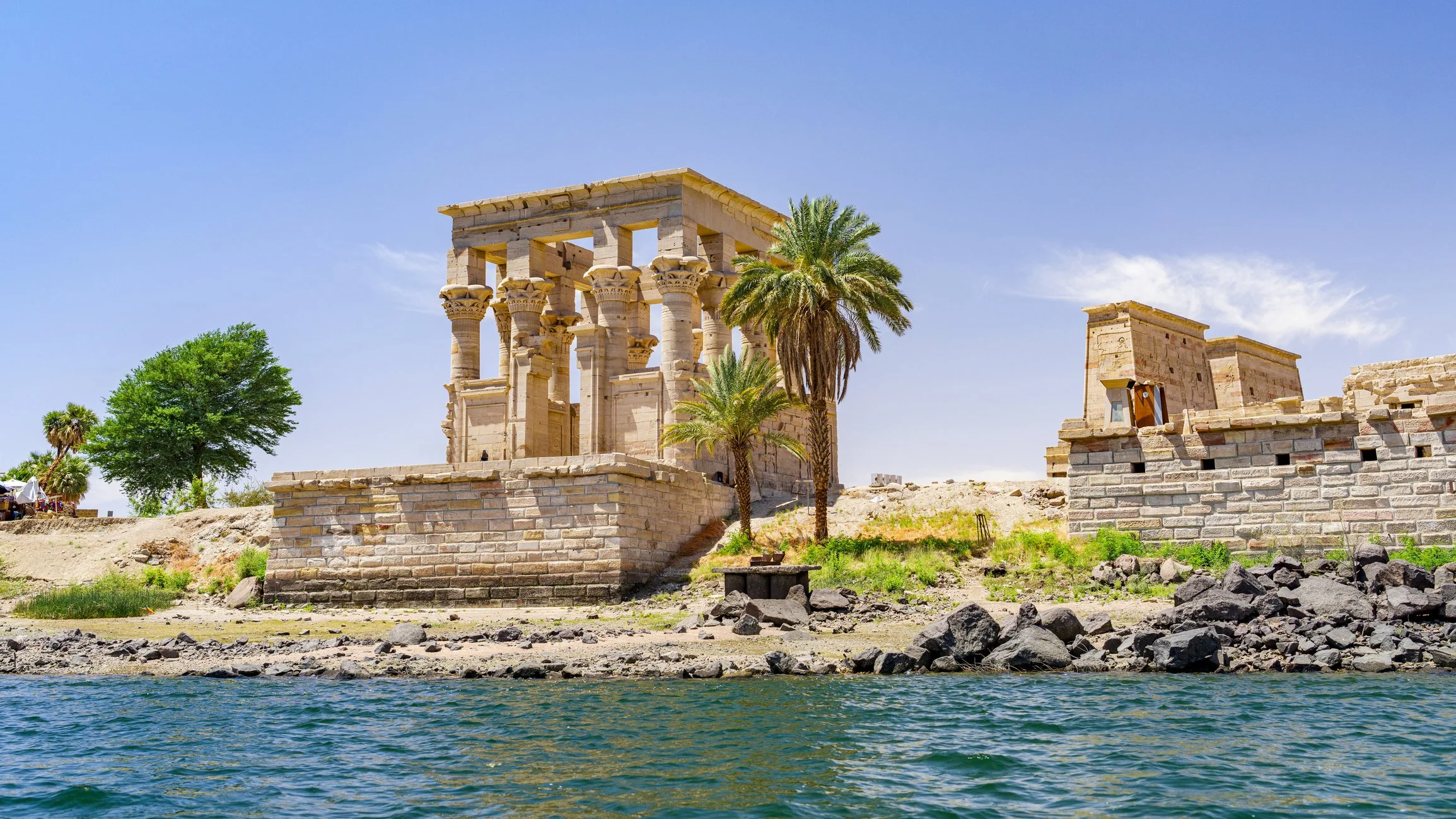
Trajan’s Kiosk, ASwan, EGYPT. Photo Credit: Moiola/Sysaworld, Getty Images
For something rooted in an older Cairo, Abou El Sid in Zamalek has built a following as a city institution. Named for a legendary chef of the Sultan, said to have been kidnapped and forced to cook for the palace before eventually escaping, the restaurant leans into that history with dim, cavernous rooms, mosaic floors, and heavy wooden tables that feel unchanged since the 1940s. The menu runs deep into Egyptian home cooking, from stuffed vine leaves to slow-cooked pigeon, and reservations are essential on weekend evenings. Where Khufu's represents Egypt's culinary future, Abou El Sid preserves its past.
A few practical notes apply across Cairo's better tables. Dress runs smart-casual, though some hotel restaurants discourage shorts. Most upscale spots serve alcohol, typically local labels like Omar Khayyam alongside Stella or Sakara beer, though plenty of casual restaurants serve none at all. A service charge often appears on the bill, but it does not always reach staff, so a further ten to fifteen percent in cash is standard practice.
Beyond Cairo
No trip to Egypt is complete without time on the Nile itself. A cruise between Luxor and Aswan remains the classic way to see Upper Egypt, threading past Karnak Temple, the Valley of the Kings, and the clifftop Temple of Hatshepsut before reaching Aswan's granite quarries and Philae Temple. From Aswan, a flight or a three-hour drive across the desert leads to Abu Simbel, where Ramesses II's colossal statues still align with the sunrise twice a year, a feat of ancient engineering that predates any tool that could have measured it. Travelers with more time might also consider Alexandria on the Mediterranean coast, a quieter counterpoint to Cairo's density, or the Red Sea resorts of Sharm el-Sheikh and Hurghada for a few days of diving before heading home.
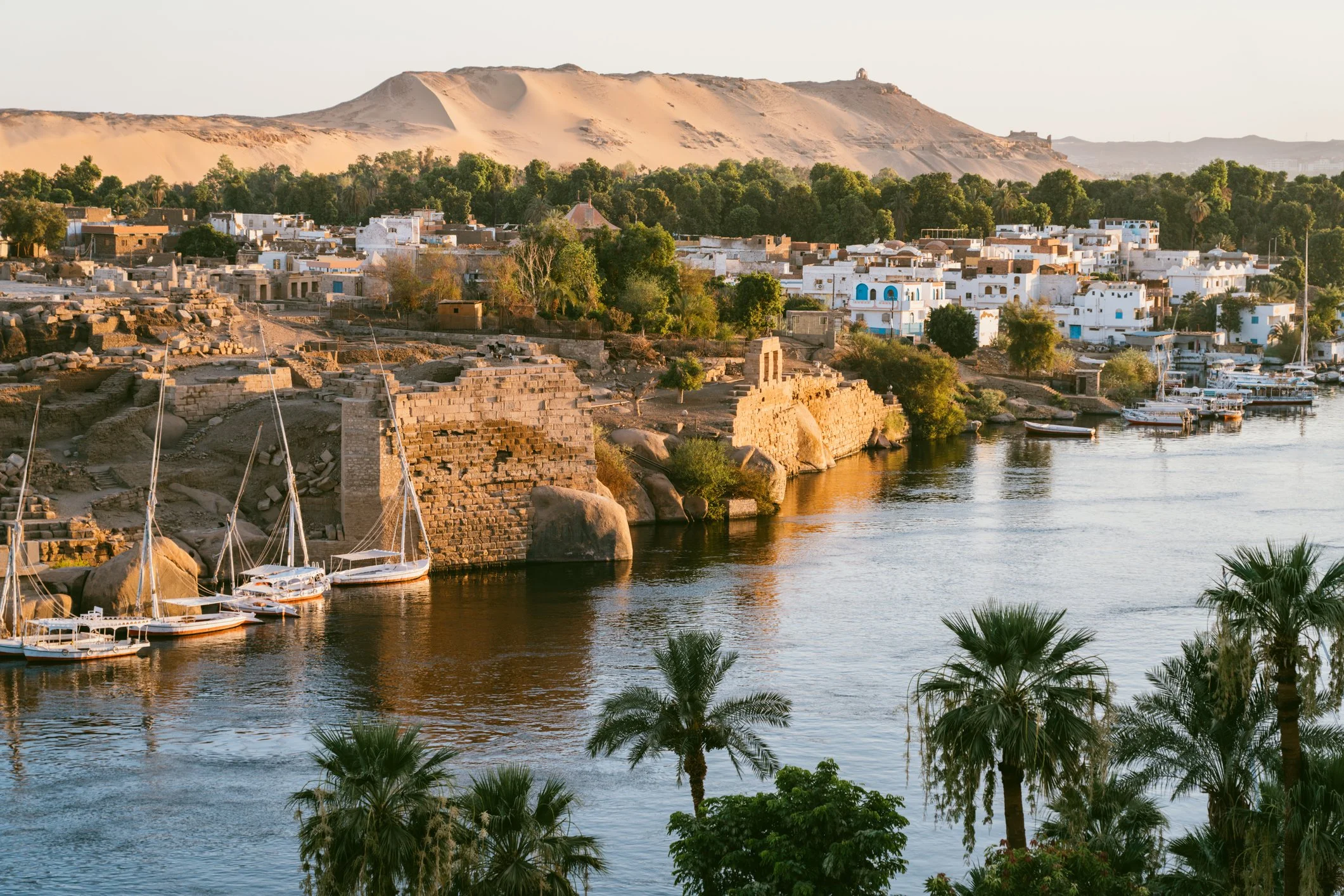
The Nile in Aswan, Egypt. Photo Credit: Chalffy, Getty Images
Closer to Cairo, an evening felucca sail on the Nile remains one of the simplest and most memorable ways to see the city, drifting past the Cairo Opera House and Cairo Tower as the skyline lights up. Khan el-Khalili, the market that has operated since the 14th century, is worth an afternoon for anyone interested in gold, spices, and the general theater of Cairo commerce. Domestic flights connect Cairo to both Luxor and Aswan in roughly an hour, making a Nile cruise easy to bolt onto either end of a Cairo stay without sacrificing days to overland travel.
Egypt rewards patience and a bit of planning. The distances between its major sites are real, the heat can be unforgiving outside the cooler months, and the sheer density of history in Cairo alone could fill a week. But arriving well, staying at addresses that are themselves part of the story, and eating at tables that reflect both the country's past and its present all make a difference in how the trip unfolds. The newly opened Grand Egyptian Museum has only added to the case for going now rather than later.
To make your journey as seamless as the adventure itself, trust Air Charter Guide for comprehensive, up-to-date flight booking information, ensuring every step of your trip is smooth and stress-free. Whether your itinerary calls for a sunrise landing in time for the pyramids or the extra hop out to Abu Simbel, let Air Charter Guide help you get there.