Europe's Christmas Markets: Of Light and Luxury
/Over the centuries, as traditions and religions evolved across the European continent, the Yule season has consistently transformed ancient city squares into glittering wonderlands where the scent of roasted chestnuts mixes mid-air with mulled wine, hand-carved wooden ornaments catch the soft glow of twinkling lights, and where centuries-old traditions come alive in the crisp December air. The Christmas markets of Europe are a journey into the heart of European culture, where craftsmanship, culinary excellence, and holiday spirit converge in cities that have perfected the art of celebration over the course of hundreds of years.
Vienna: Imperial Elegance Meets Festive Tradition
Few cities embrace the holiday season quite like Vienna. The Austrian capital hosts some of Europe's most distinguished Christmas markets, with the crown jewel positioned at Rathausplatz in front of the illuminated City Hall. Running from November 14 through December 26, 2025, this is no ordinary market. Over 150 elaborately decorated stalls spread across the square, each one hand-adorned according to strict traditional standards that have been maintained for generations. The Vienna Christkindlmarkt transforms the already magnificent baroque architecture into something even more theatrical. You’ll stand at the neo-Gothic Rathaus façade bathed in golden light while an ice skating rink carved into the park draws couples gliding beneath the stars nearby.
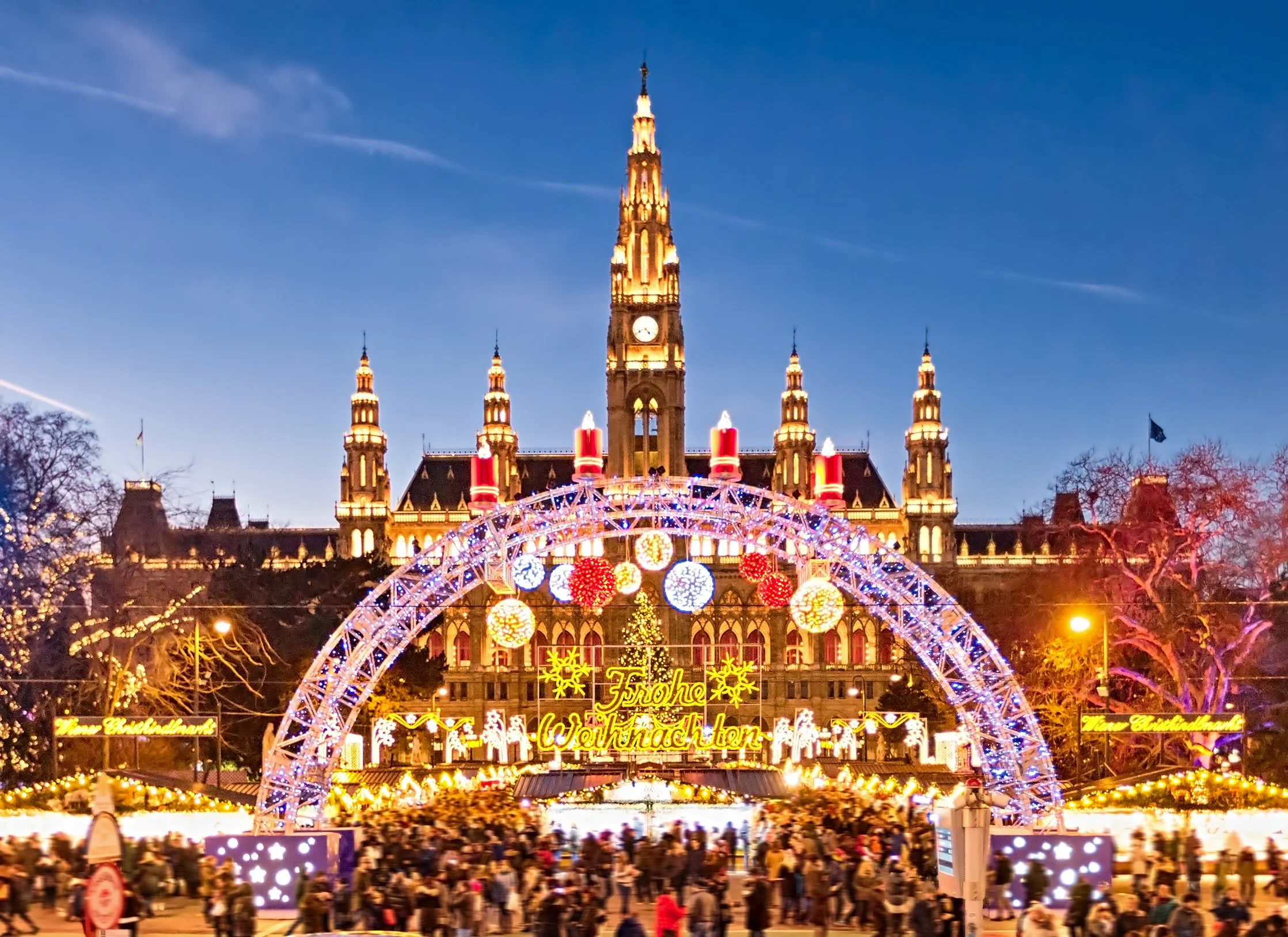
Market on Rathausplatz in Vienna at Christmas Eve. Photo Credit: RUSM, iStock / Getty Images Plus.
The air carries the unmistakable perfume of Viennese holiday tradition: vanilla crescent cookies cooling on griddles, punch warming in copper kettles, and baked apples releasing their cinnamon sweetness. Children press their noses against stall windows displaying miniature Nativity scenes while adults browse handcrafted ornaments that represent hours of artisan work. Visiting this market, you can feel assured of the authenticity and quality of items as every vendor passes rigorous selection standards.
Vienna's accommodation scene matches the grandeur of its markets. Hotel Imperial, a Luxury Collection property occupying a former city palace built in 1873, sits along the Ring boulevard where its legendary Christmas lights provide one of the season's most photographed displays. The hotel's Imperial Torte, created for Emperor Franz Joseph at the building's grand opening, remains a seasonal tradition. Meanwhile, The Ritz-Carlton Vienna, housed within four 19th-century palaces along the Ringstrasse, offers suites with panoramic city views where guests watch the festive activity from heated terraces. The property's Atmosphere Rooftop Bar becomes an exclusive winter wonderland complete with ski gondola seating and blankets, transforming the eighth floor into Vienna's most coveted après-market retreat.
Strasbourg: Capital of Christmas Since 1570
Strasbourg’s title "Capitale de Noël" is not a marketing ploy; it's a historical fact. The city's Christkindelsmärik dates to 1570, making it one of Europe's oldest continuous Christmas markets. From November 16 through January 5, 2026, this Alsatian masterpiece spans 11 locations in the old town, each with its own distinct character. Place Kléber features a towering Christmas tree while the cathedral square market provides the most dramatic backdrop imaginable, with Gothic spires soaring above timber-frame stalls that look like they've been plucked from a medieval manuscript.
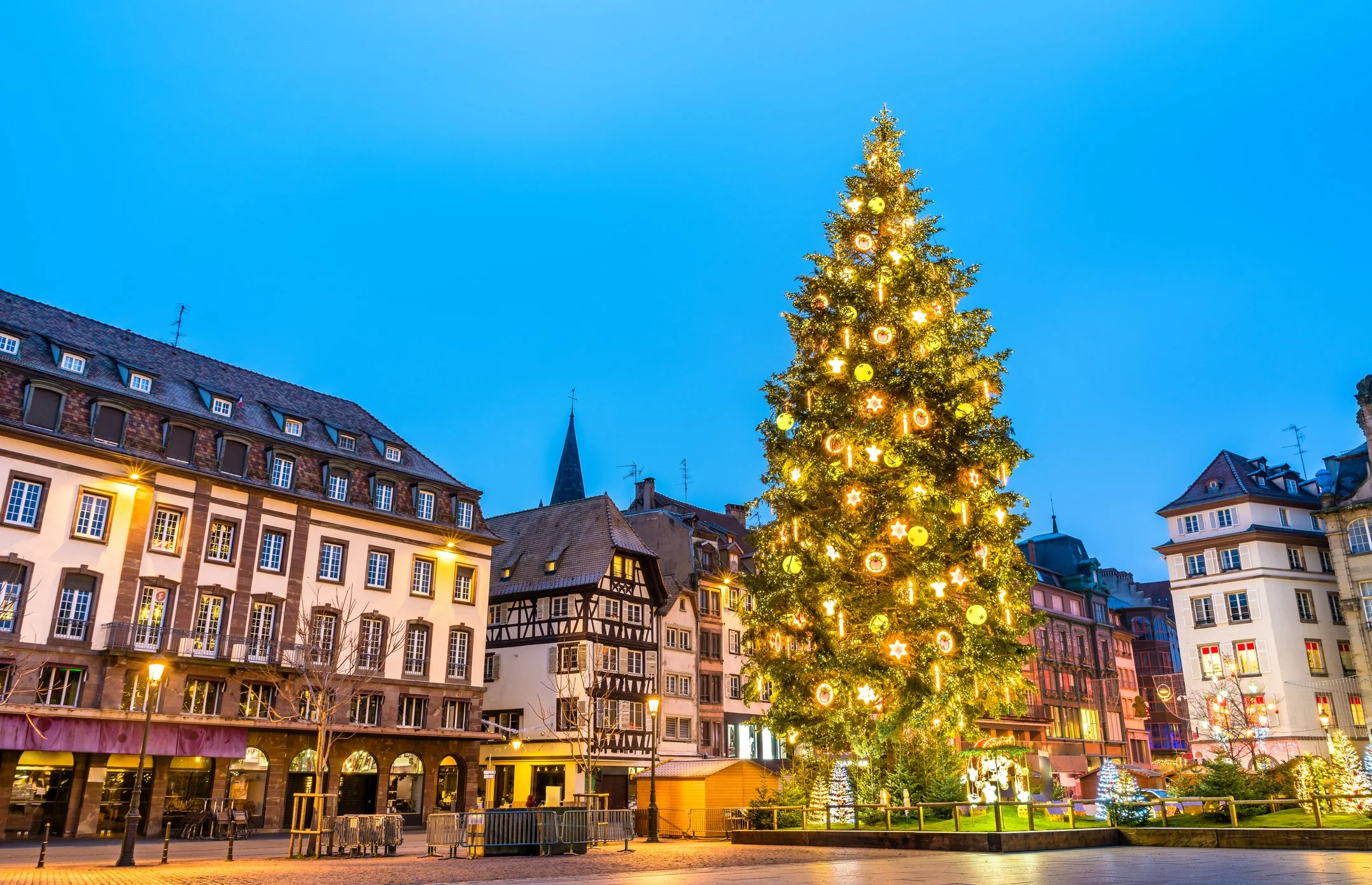
Christmas tree on Place Kleber in Strasbourg, France. Photo Credit: Leonid Andronov, iSTock / Getty iMages plus.
The Alsatian approach to Christmas markets emphasizes regional authenticity. Stalls overflow with hand-painted glass ornaments from local ateliers, intricately carved wooden toys from Black Forest artisans, and ceramic decorations bearing traditional motifs. The culinary offerings showcase Alsace's unique position at the crossroads of French and German culture: vin chaud spiced with cinnamon and star anise, flammkuchen with a paper-thin crust, and bredele cookies in dozens of traditional varieties, each representing a different Alsatian town and its particular recipes passed down through generations.
Dining in Strasbourg during the Christmas season reaches remarkable heights. Restaurant 1741 earned its Michelin star through chef Jérémy Page's delicate, precise cuisine that weaves Alsatian inspiration into contemporary French technique. Positioned opposite the Palais Rohan architectural masterpiece, the restaurant's intimate dining rooms and kitchen counter seating allow guests to watch Page and his team craft dishes like lightly seared John Dory with seaweed cream or wild boar medallions in Grand Veneur game sauce. Au Crocodile, marked by its stuffed crocodile display returned by a Napoleonic soldier from Egypt, remains a culinary institution following a complete refurbishment that preserved its historic character while elevating its already impressive standards.
Prague: Bohemian Splendor Beneath Ancient Spires
Prague's Old Town Square market possesses a particular kind of magic. Running from November 29 through January 6, 2026, it unfolds beneath the astronomical clock that has measured time since 1410, with baroque church towers and Gothic architecture creating a backdrop so cinematic it hardly seems real. CNN Travel has recognized the market as one of the world's five most beautiful markets, and European Best Destinations voters have repeatedly named it among Europe's finest. Once you've experienced the square at twilight, when golden lights reflect off snow-dusted cobblestones and medieval buildings glow amber in the December dusk, you’ll see why.
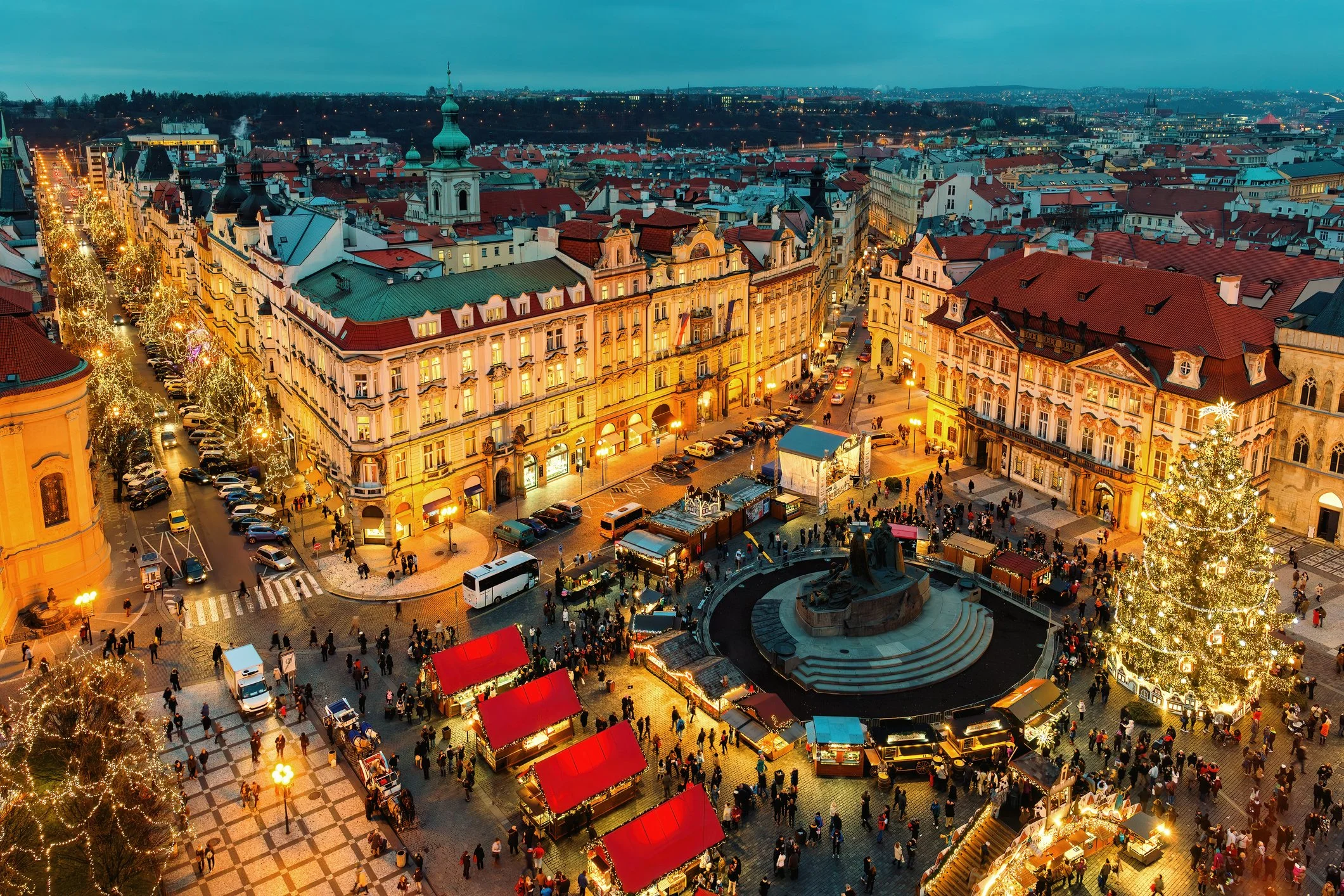
Aerial view of the famous Christmas market on the Old Town Square in Prague. Photo Credit: RGlinsky, iStock / Getty Images Plus.
What sets Prague apart is how seamlessly the market integrates with the city's architectural treasures. Charles Bridge, with its statues and gas lamps still lit by hand each evening by a traditional lamplighter, connects the market to Prague Castle's silhouette on the hill. The market stalls themselves offer distinctly Czech specialties: trdelník chimney cakes wrapped around wooden dowels and caramelized with cinnamon sugar, bohemian glass ornaments in jewel tones that have been a Czech specialty for centuries, and svařené víno, mulled wine that locals insist on drinking while standing, conversing, never rushing.
The Four Seasons Hotel Prague occupies prime riverfront real estate where the Vltava River bends, offering suites with views stretching from Charles Bridge to the castle. The property's festive programming includes afternoon tea inspired by Dior, complete with bespoke canapés and desserts served by the fireplace in The Gallery lounge. For those seeking something more intimate, the Alchymist Grand Hotel and Spa in Lesser Town provides baroque opulence just steps from Prague Castle. Executive Chef Pavel Sapík's Christmas menus showcase contemporary Czech cuisine. When it's time to unwind, the Gothic vaulted spa cellar with an indoor pool illuminated by a crystal chandelier offers the perfect retreat after hours of market exploration.
Beyond the Icons: Hidden Gems Worth Discovering
While Vienna, Strasbourg, and Prague deservedly claim top billing, several lesser-known markets offer equally compelling experiences for discerning travelers. Zagreb's Advent celebrations, running from November 29 through January 7, span 25 locations across the Croatian capital, creating what locals call the "Advent in Zagreb" experience. The city earned the title of "Best Christmas Market" from European Best Destinations for three consecutive years before being retired from competition, having earned the maximum number of awards possible. The markets feature live Nativity scenes, ice sculpture demonstrations, and a dedicated "fuliranje" zone for street dancing and live entertainment that captures Croatia's more exuberant holiday spirit.
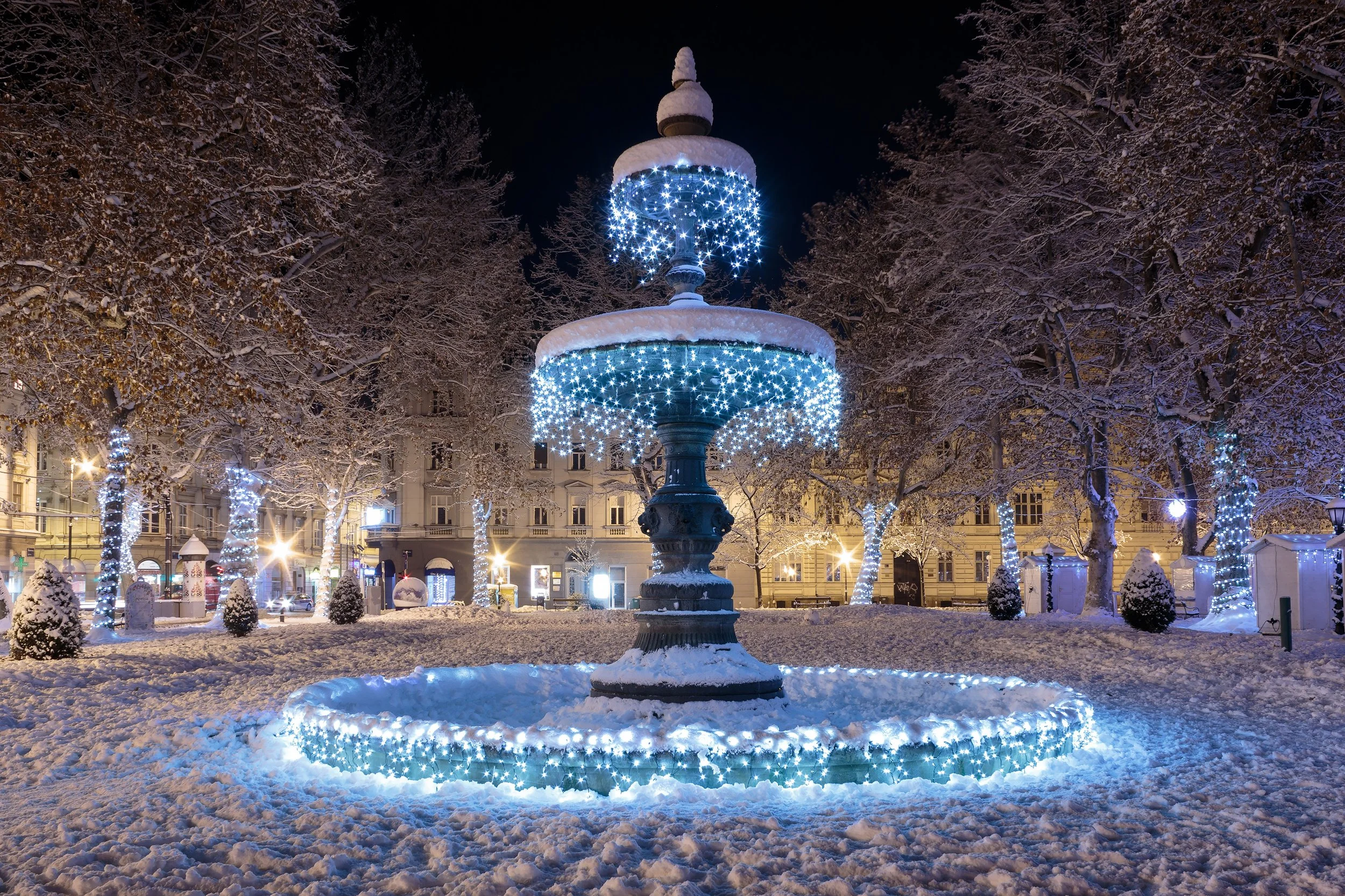
Zrinjevac Fountain decorated by Christmas lights as part of Advent in Zagreb. Photo Credit: DarioZg, iStock / Getty Images Plus.
Tallinn's Christmas market, operating from November 21 through December 28, centers on the tree with impressive provenance: Tallinn is credited with the first publicly displayed Christmas tree, starting the tradition in 1441. The Estonian market embraces sustainability while maintaining tradition, offering black pudding, sour cabbage, and warm drinks alongside traditional handicrafts. The medieval architecture of Tallinn's old town, remarkably preserved and UNESCO-listed, provides an atmospheric setting where cobbled streets and merchant houses create an authentic medieval ambiance rarely found elsewhere.
Salzburg's Christkindlmarkt, set against the backdrop of the Hohensalzburg Fortress from November 15 through December 23, represents one of Europe's oldest markets, with roots in the 15th century. The fortress illumination combined with the market's traditional wooden stalls creates scenes that Mozart himself would recognize. Local specialties include Jagertee, a warming herbal tea with a spirit base that's perfect for alpine winters, and handcrafted ornaments reflecting Salzburg's long tradition of religious art and woodworking.
The Art of Market Navigation
Timing proves crucial for optimal Christmas market experiences. Weekday afternoons offer the most relaxed browsing, while weekend evenings provide maximum atmosphere at the cost of larger crowds. Markets typically reach full operation by late November, with the weeks from December 10-23 representing peak season when locals join tourists in holiday shopping. Most markets close on Christmas Eve or shortly thereafter, though several—particularly in Prague, Brussels, and Zagreb—extend operations through New Year's and into early January.
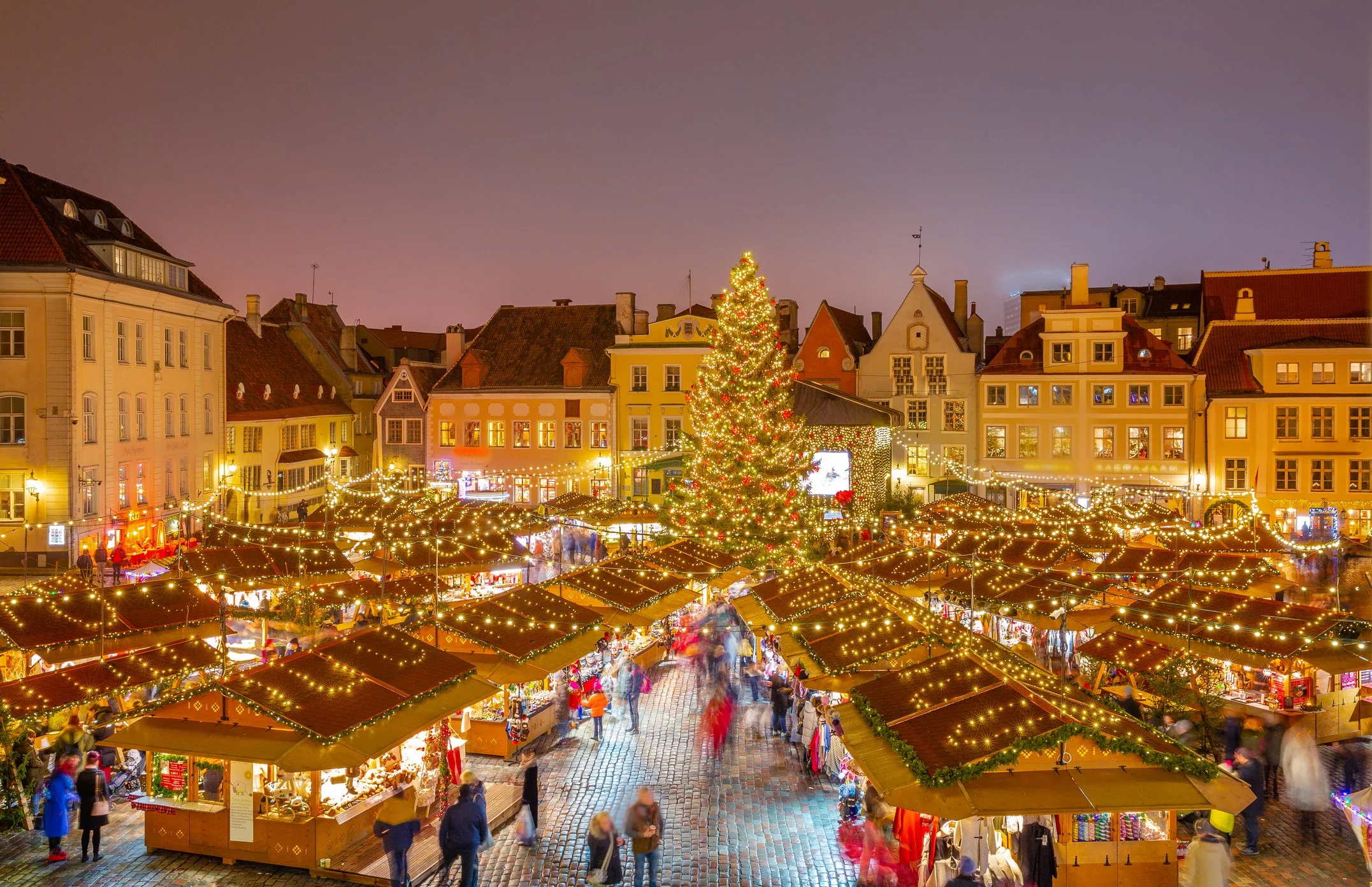
Christmas market in Tallinn, Estonia. Photo Credit: Subodh Agnihotri, iStock / Getty Images Plus.
Early December visits, particularly during the week following Thanksgiving, offer the ideal combination of festive atmosphere and manageable crowds. Hotels reduce rates before the peak season rush, restaurants maintain easier availability, and the markets themselves feel less frantic, allowing time to actually converse with artisans about their crafts and sample multiple food offerings without the anxiety of queuing.
Travel between markets rewards the ambitious. The geographic concentration of Europe's finest Christmas markets—Vienna to Prague requires just four hours by train, Strasbourg to Cologne even less—makes multi-city itineraries remarkably feasible. Many travelers construct week-long journeys hitting four or five markets, allowing each day to bring a different city's interpretation of Christmas tradition.
Planning Your Market Journey
Successful Christmas market travel requires more advanced planning than typical European trips. Hotels near premier markets book months ahead, pay in advance for peak weekends. Restaurant reservations at Michelin-starred establishments should be secured eight to twelve weeks out during December. Market schedules occasionally shift, so confirming exact dates before booking travel prevents disappointment.
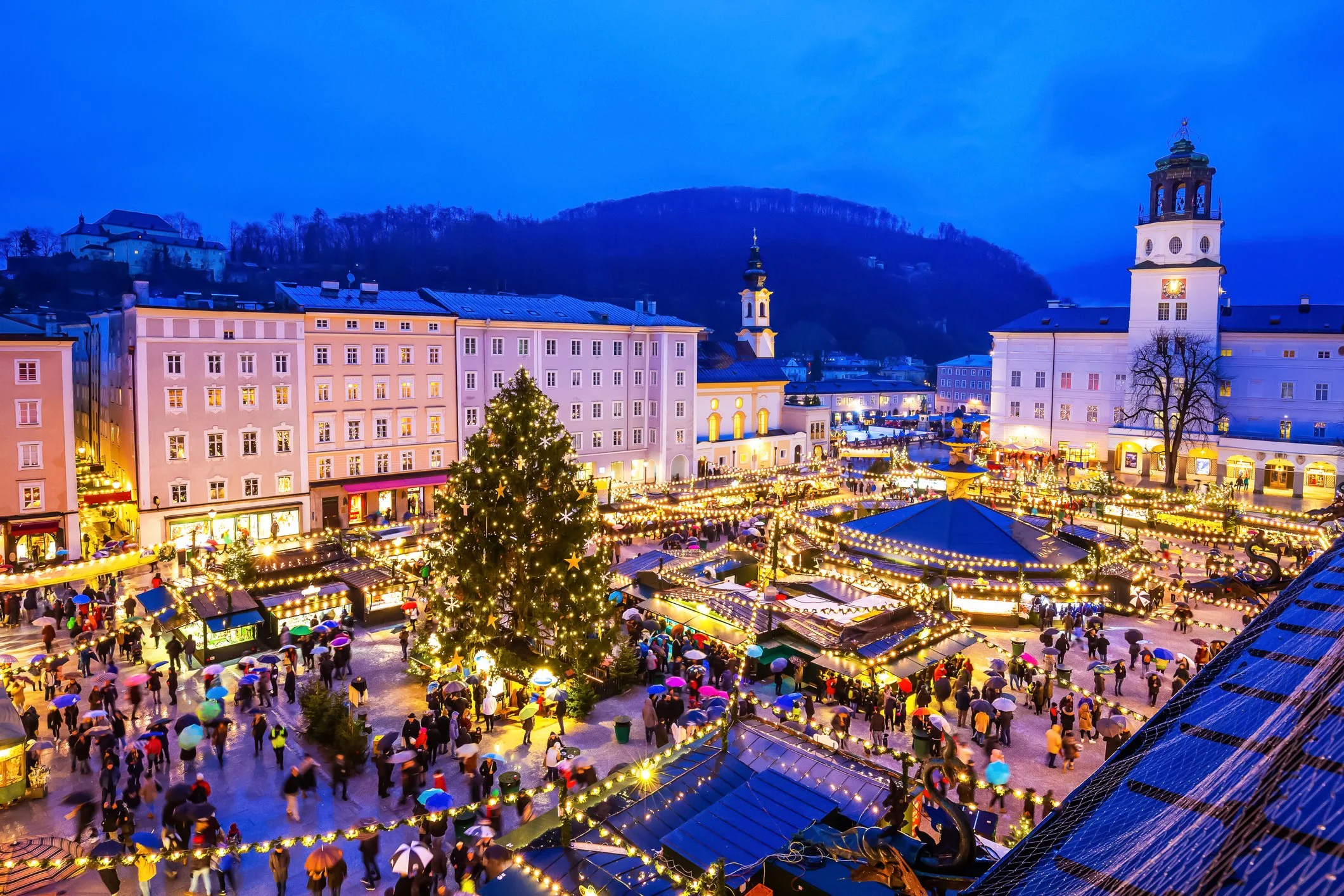
Salzburg's Christkindlmarkt, Austria. Photo Credit: SCStock, iStock / Getty Images Plus.
Central European December means temperatures regularly dipping below freezing, especially during evening market hours when the atmosphere peaks, so be sure to pack for legitimate winter weather. Quality cold-weather gear isn't optional; it's the difference between enjoying three hours exploring markets versus retreating after 45 minutes. Comfortable, waterproof boots prove essential for navigating cobblestones that become treacherous when wet.
European Christmas markets represent travel at its most enchanting. They combine cultural immersion, culinary discovery, and aesthetic beauty in settings where history feels tangible and tradition remains a living practice rather than a museum exhibit. Whether sipping punch beneath Vienna's illuminated Rathaus, browsing Bohemian glass in Prague's medieval square, or warming hands around vin chaud in Strasbourg's cathedral shadow, these markets offer experiences that define the holiday season for those fortunate enough to witness them.
For those seeking to experience Europe's Christmas magic with efficiency and comfort befitting the destination, Air Charter Guide provides comprehensive flight booking information, ensuring your journey matches the elegance awaiting you. When centuries of tradition and seasonal splendor call, getting there should feel as exceptional as the destination itself.