Travel Guide: La Scala 2025
/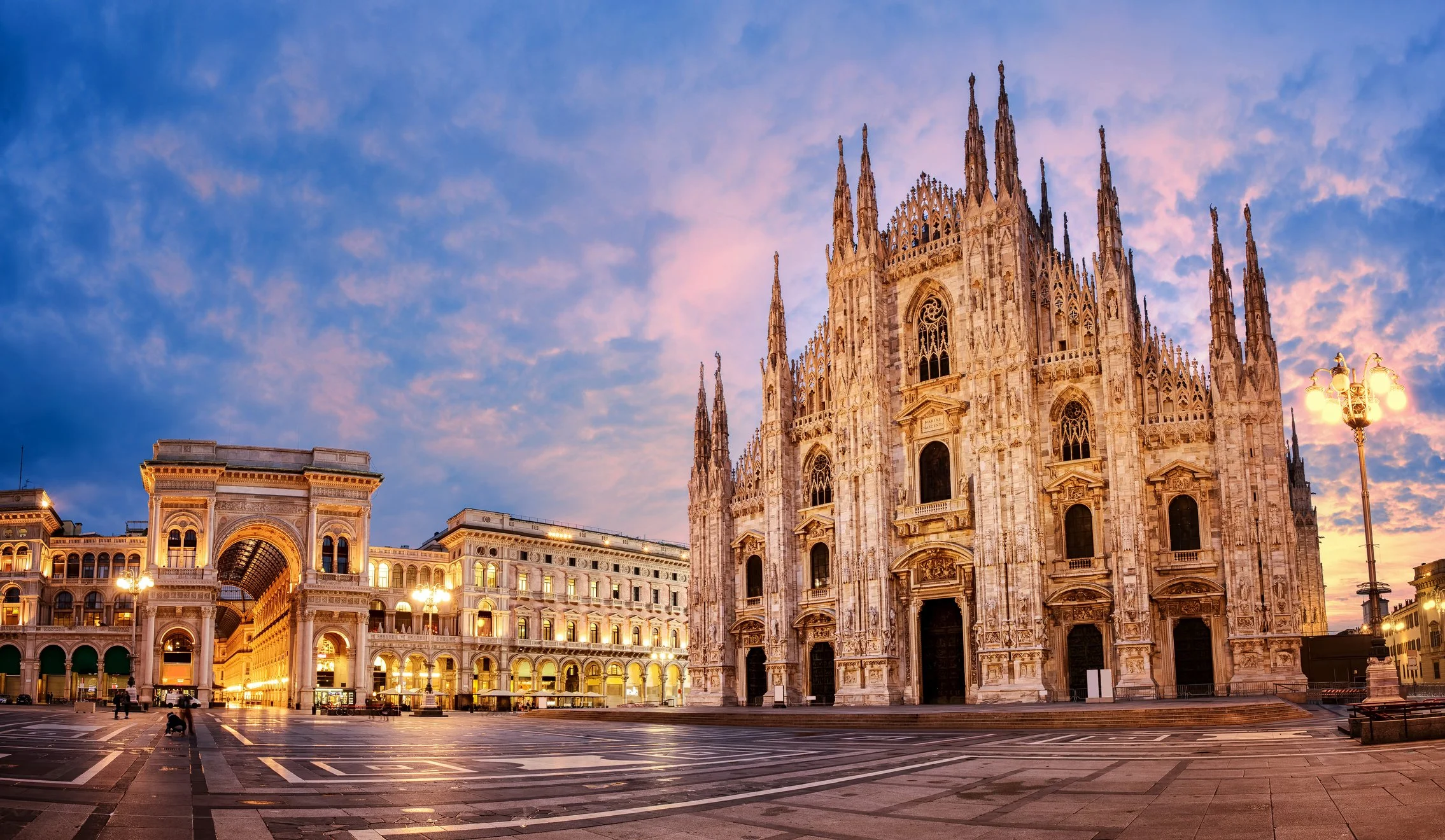
Duomo di Milano, Italy. Photo Credit: Xantana, iStock / Getty Images Plus
Curtain Call to History
December 7, 2025. Milan's ancient bells echo across cobblestone piazzas while winter's first breath touches the Gothic spires of the Duomo. Tonight, Teatro alla Scala illuminates its legendary stage with one of opera's most dangerous works: Dmitri Shostakovich's "Lady Macbeth of Mtsensk."
This season opener arrives exactly fifty years after the composer's death, carrying with it an opera that once made Stalin furious enough to destroy careers. The choice isn't accidental. La Scala's artistic director understands that some anniversaries demand bold statements.
The story itself reads like a nightmare. Katerina Izmailova, trapped in a loveless marriage to a merchant, begins an affair that spirals into murder. She kills her husband, then his father, before ending up in Siberian exile, where betrayal drives her to suicide. It's Shakespeare's Lady Macbeth filtered through Russian brutality, set to music by a composer who barely survived his government's artistic purges.
After its 1934 premiere in St. Petersburg, "Lady Macbeth" toured internationally to great acclaim. Then Stalin attended a Moscow performance in January 1936. Two days later, Pravda published a scathing review titled "Chaos Instead of Music." The opera vanished from Soviet stages for decades, and Shostakovich spent years fearing for his life. Tonight's performance represents more than entertainment—it's a testament to artistic vindication.
The Cathedral of Sound
La Scala operates like a small nation with its own customs, hierarchies, and unwritten laws. Built in 1778 on the site of an old church, this neoclassical building has absorbed nearly three centuries of triumph and disaster. The horseshoe-shaped auditorium, draped in red velvet and gold leaf, holds 2,030 people across six tiers that reflect both Milan's social structure and its democratic passion for extraordinary singing.
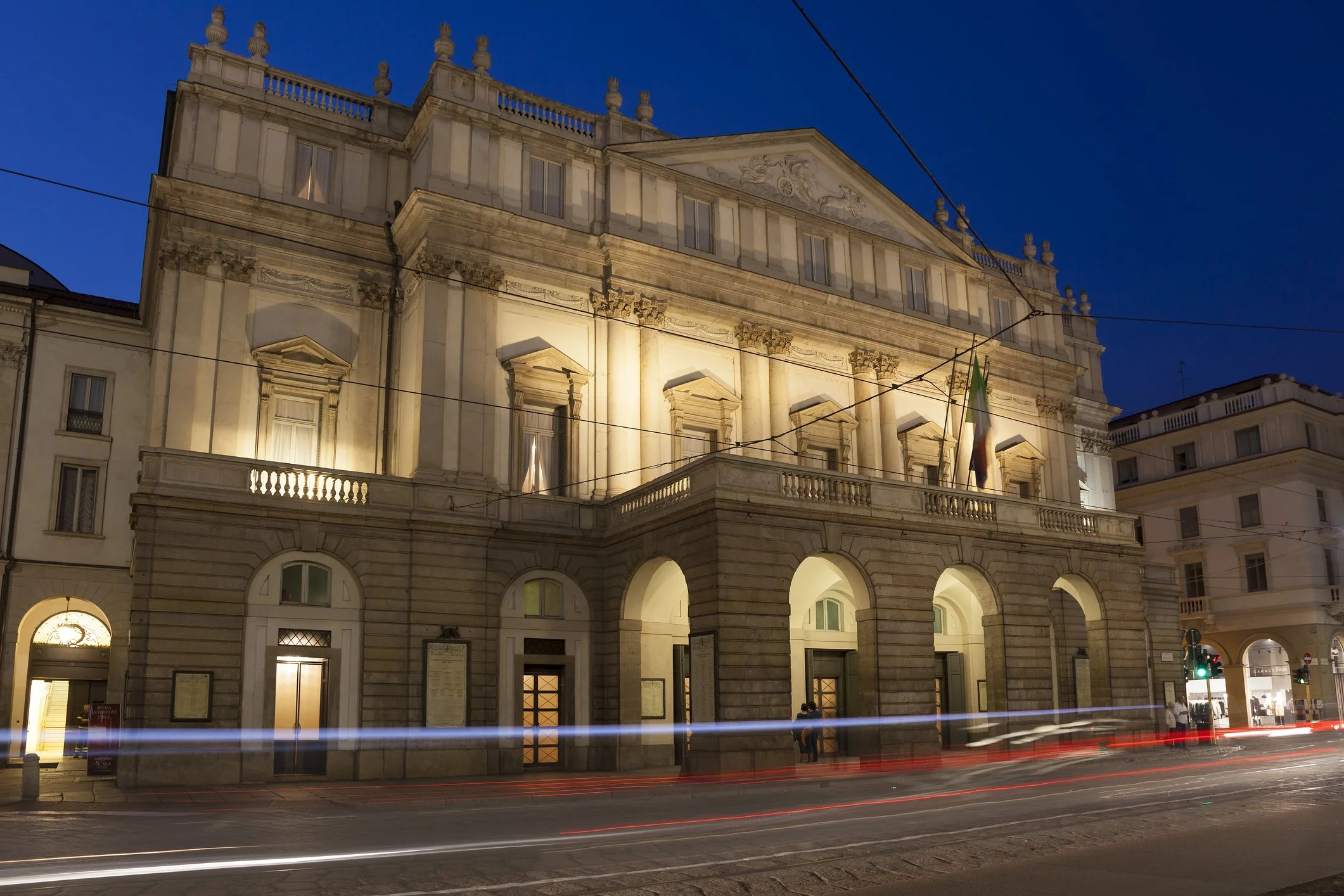
La Scala Opera House, Milan. Photo credit: JavierGil1000, iStock / Getty Images Plus
The cheapest seats sit high in the gallery, where hardcore opera fans gather regardless of their bank accounts. These enthusiasts know every note, every staging tradition, every singer's strengths and weaknesses. They'll applaud a perfect high C and boo mercilessly at mediocrity. The expensive boxes (palchi) house Milan's elite, international visitors, and anyone wealthy enough to pay thousands for a single evening. But money can't buy respect here—that comes only through genuine appreciation for the art.
Riccardo Chailly conducts, bringing his deep understanding of both Verdi's romantic tradition and twentieth-century modernism. Russian director Vasily Barkhatov makes his La Scala debut with this production. Sara Jakubiak stars as Katerina, supported by Alexander Roslavets, Najmiddin Mavlyanov, and Alexander Kravets—singers who must navigate Shostakovich's demanding score while portraying characters caught between passion and destruction.
The technical challenges are immense. Shostakovich wrote music that shifts between beautiful melodies and harsh, percussive outbursts. Singers need tremendous stamina for roles that demand both lyrical beauty and dramatic intensity. The orchestra faces similar demands, transitioning from chamber-music intimacy to full symphonic power within a single scene.
The Ritual of "Il Primo"
Opening night transformed into Milan's most important social event when Victor de Sabata relocated it to December 7, 1951. Sant'Ambrogio, the city's patron saint, now presides over an evening that attracts government officials, fashion designers, business leaders, and cultural figures from around the world.
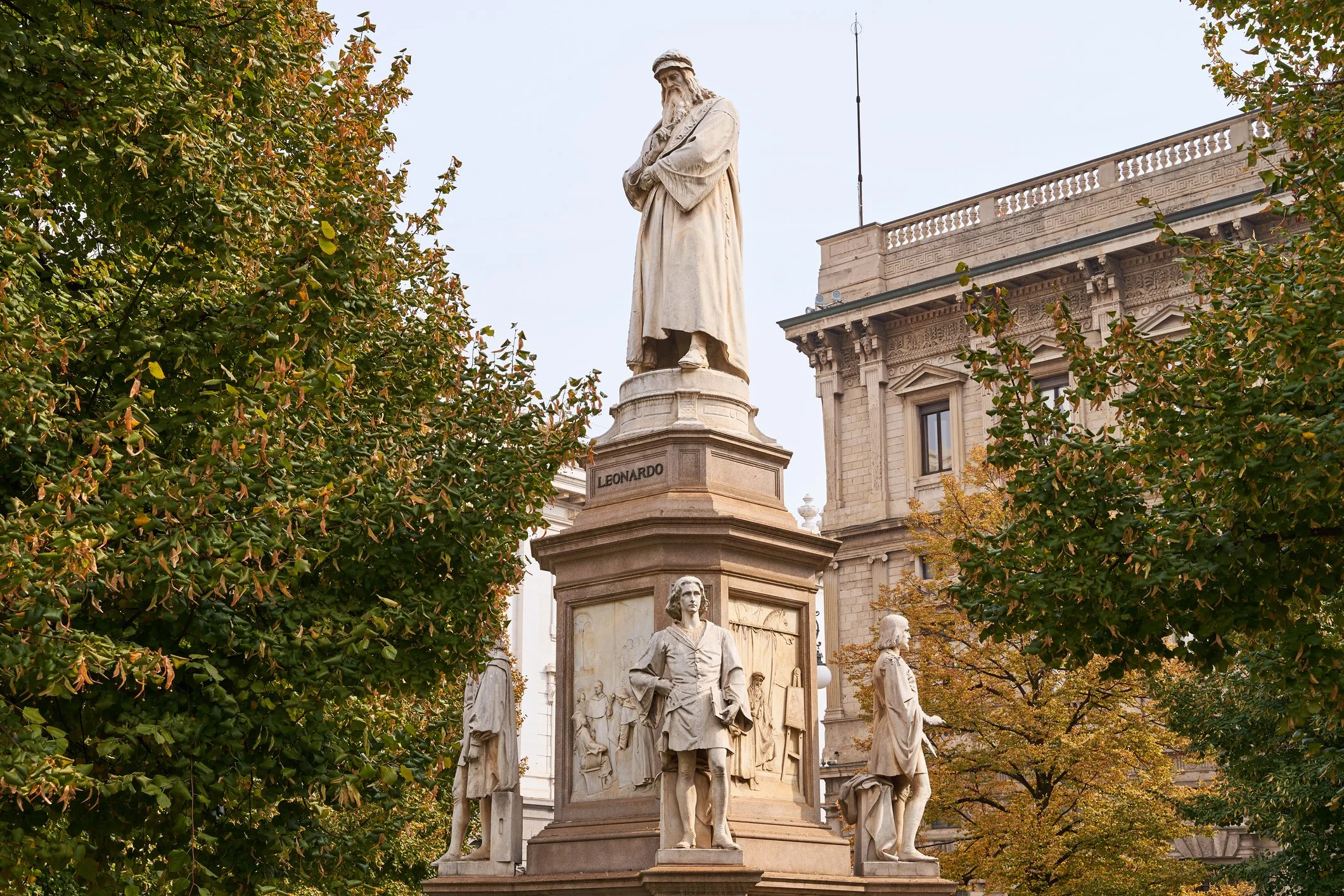
Monument to Leonardo da Vinci built by Pietro Magni in 1872 in Milan, Italy on Piazza della Scala. Photo Credit: Francesco Rizzuto, iStock / Getty Images Plus
The ritual begins hours before curtain time. Piazza della Scala fills with photographers and curious onlookers hoping to spot celebrities. The red carpet becomes a theater unto itself, where fashion choices get dissected by newspapers and social media. Milan's status as a global fashion capital means opening night outfits receive serious scrutiny—one unflattering photograph can damage reputations.
Inside the theater, champagne flows in the foyer while conversations take place in Italian, English, French, German, and Russian. Business deals get discussed between acts. Critics compare notes in the corridors. First-time visitors gawk at the ornate decorations while seasoned attendees network with practiced efficiency.
But La Scala's genius lies in democratizing this exclusive event through "Prima Diffusa." The city broadcasts the performance live to over thirty locations—movie theaters, cultural centers, even prisons. Galleria Vittorio Emanuele II's Ottagono provides free viewing for anyone willing to stand in Milan's December cold. This tradition ensures that economic barriers don't completely separate people from great art.
Towers of Elegance
Milan's luxury hotels understand their role in opening night theater. The Four Seasons occupies a former 15th-century convent, offering suites around private gardens where guests can recover from emotional overload. Its location near the fashion district means emergency outfit adjustments are possible right up to curtain time.
The Mandarin Oriental spreads across four historic buildings connected by gardens that create an urban oasis. The presidential suite's terrace overlooks both the city and La Scala's neoclassical facade, perfect for post-opera champagne while reflecting on the evening's artistic impact.

The Galleria Vittorio Emanuele II connects Piazza del Duomo and Piazza della Scala, housing high-end boutiques, cafes and restaurants. Photo Credit: Guven Ozdemir, iStock / Getty Images Plus
Armani Hotel Milano is a manifestation of Giorgio Armani's aesthetic philosophy: elegant minimalism where every detail serves a purpose. Located in the heart of the fashion district, it attracts guests who appreciate understated luxury over flashy displays. The suites provide quiet sanctuaries for reflection after experiencing Shostakovich's emotional extremes.
Park Hyatt Milano sits directly across from La Scala—you can walk from your room to your seat in under two minutes. This proximity makes it popular with international opera enthusiasts who want convenience above all else. The hotel's VUN restaurant earned a Michelin star by focusing on northern Italian ingredients prepared with contemporary techniques.
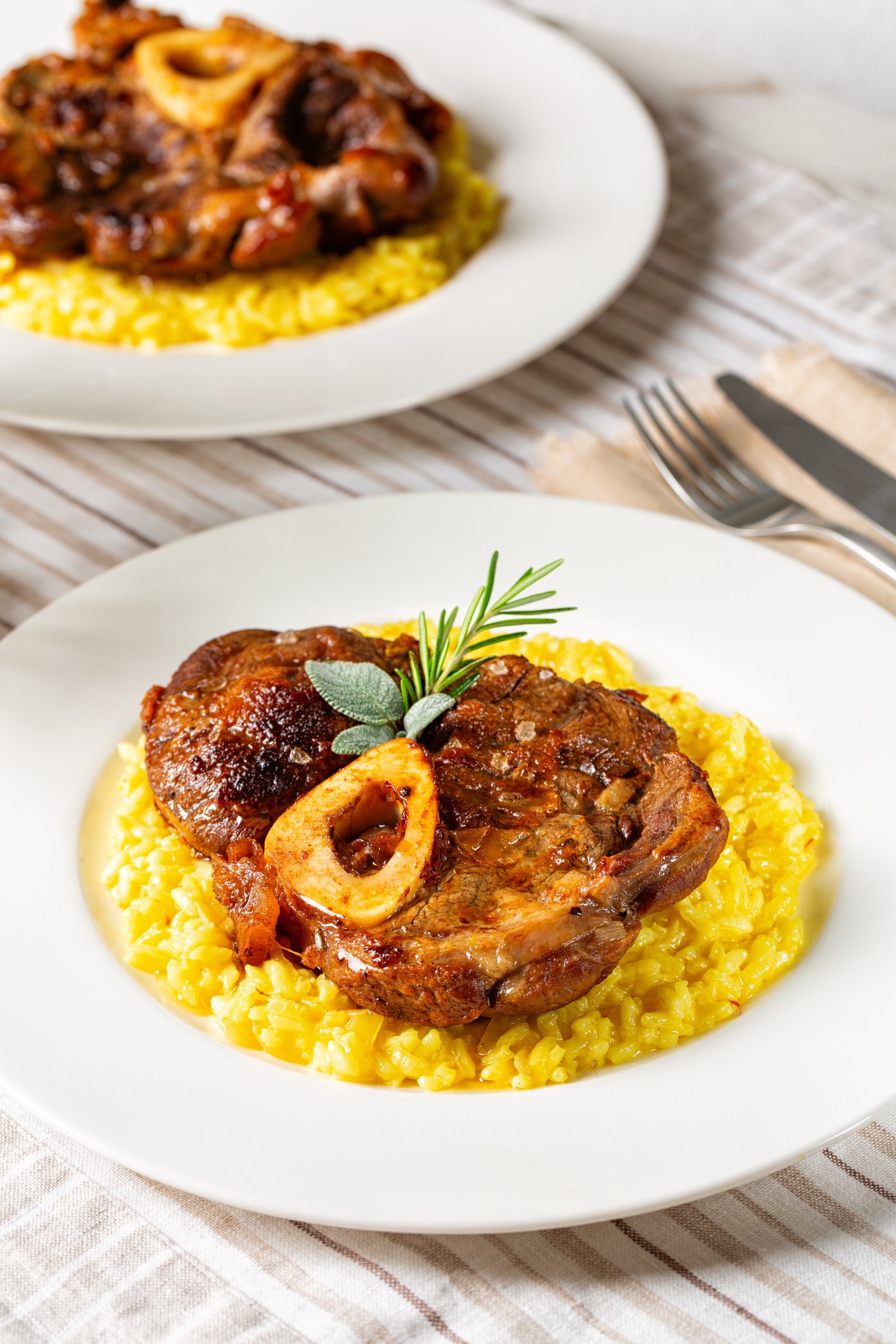
Ossobuco, a specialty of Lombard Cuisine. PHoto Credit: Olga Mazyarkina, iStock / Getty Images Plus
A Feast for the Senses
Milan takes food seriously, approaching dining with the same perfectionism it brings to fashion and design. The city's restaurants range from traditional trattorias serving recipes unchanged for generations to innovative establishments pushing culinary boundaries.
Il Luogo di Aimo e Nadia represents the pinnacle of Lombard cooking. This family-run restaurant has earned its reputation by treating regional ingredients—such as San Remo prawns, aged Gorgonzola, and Carnaroli rice—with respect while applying modern techniques. Their approach honors tradition without becoming imprisoned by it.
Seta, inside the Mandarin Oriental, showcases what happens when Italian ingredients meet international training. Chef Antonio Guida's two Michelin stars reflect cooking that's both innovative and rooted in Italian culinary philosophy. The restaurant's intimate scale makes it perfect for pre-opera dinners, though reservations are required for planning.
Traditional options matter just as much as starred establishments. Osteria del Borgo serves authentic Milanese cuisine in a setting that has remained largely unchanged since the 1950s. Their cotoletta alla milanese—a massive veal chop pounded thin, breaded, and pan-fried—represents the dish at its most traditional. No molecular gastronomy here, just perfect execution of time-tested recipes.
Trattoria Milanese, operating since 1933, specializes in dishes most tourists never encounter. Their risotto alla milanese, prepared with saffron and finished with aged cheese, demonstrates how simple ingredients become transcendent through proper technique. The wine list focuses on Lombardy producers, including Franciacorta sparkling wines that can compete with Champagne.
Beyond the Final Aria
Opening night serves as a gateway to Milan's broader cultural offerings. The Pinacoteca di Brera houses masterpieces by Caravaggio, Mantegna, and Raphael in a setting that encourages intimate viewing. During opera season, the museum extends evening hours, allowing visitors to experience Renaissance art without daytime crowds.
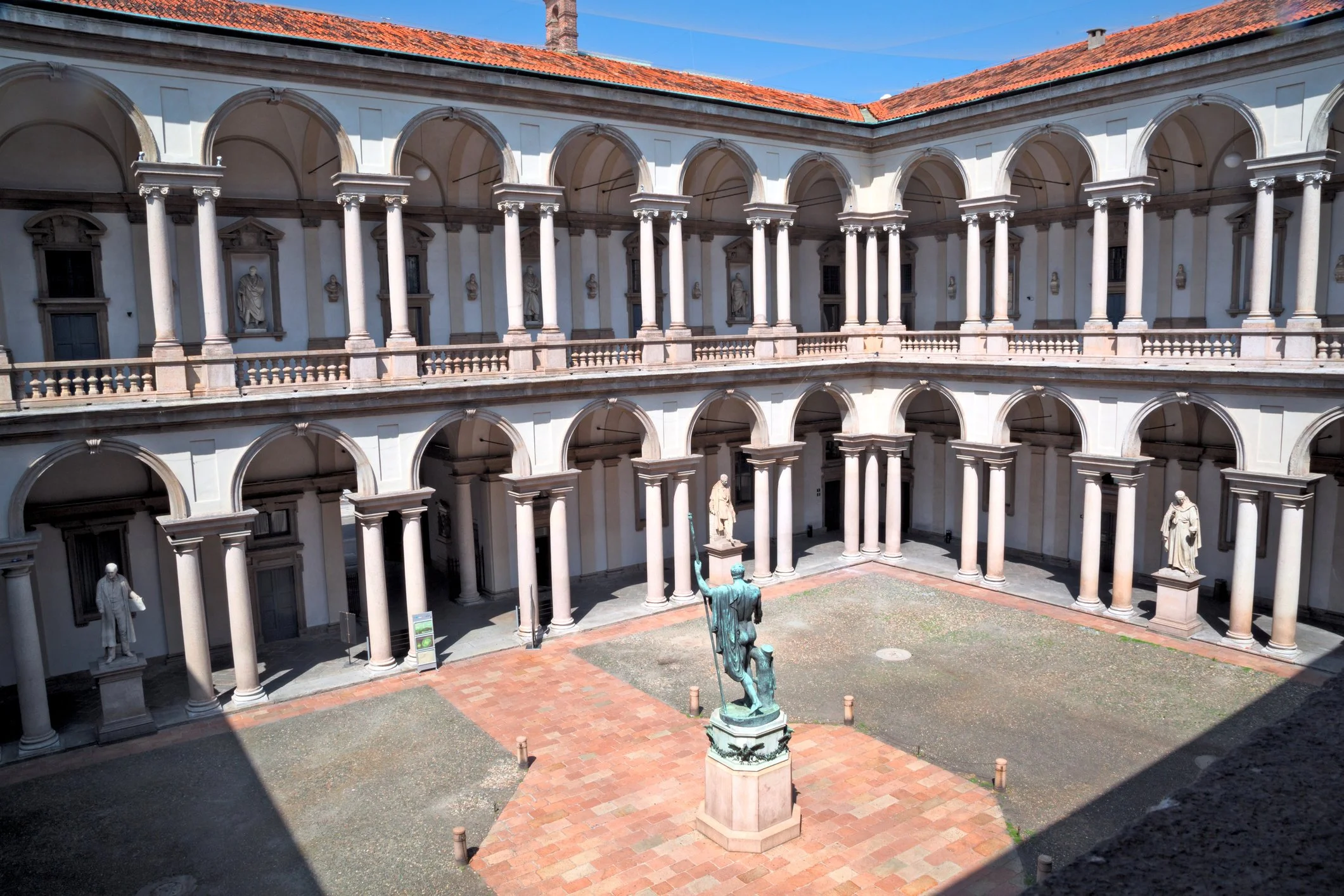
Internal courtyard of Pinacoteca di Brera, Milan. Photo Credit: Manakin, iStock / Getty Images Plus
The fashion district (Quadrilatero della Moda) represents Milan's contemporary creative energy. Via Montenapoleone and Via della Spiga host flagship stores from every major luxury brand, housed in historic palazzos that blend old architecture with cutting-edge retail design. During opera season, these stores often create special collections inspired by the season's productions.
The Navigli canal district provides Milan's alternative face. Leonardo da Vinci designed part of this waterway system, but today it hosts bars and restaurants in converted warehouses where aperitivo culture meets international sophistication. After opera performances, Navigli becomes the unofficial continuation of the evening, where conversations about art continue over wine and small plates.
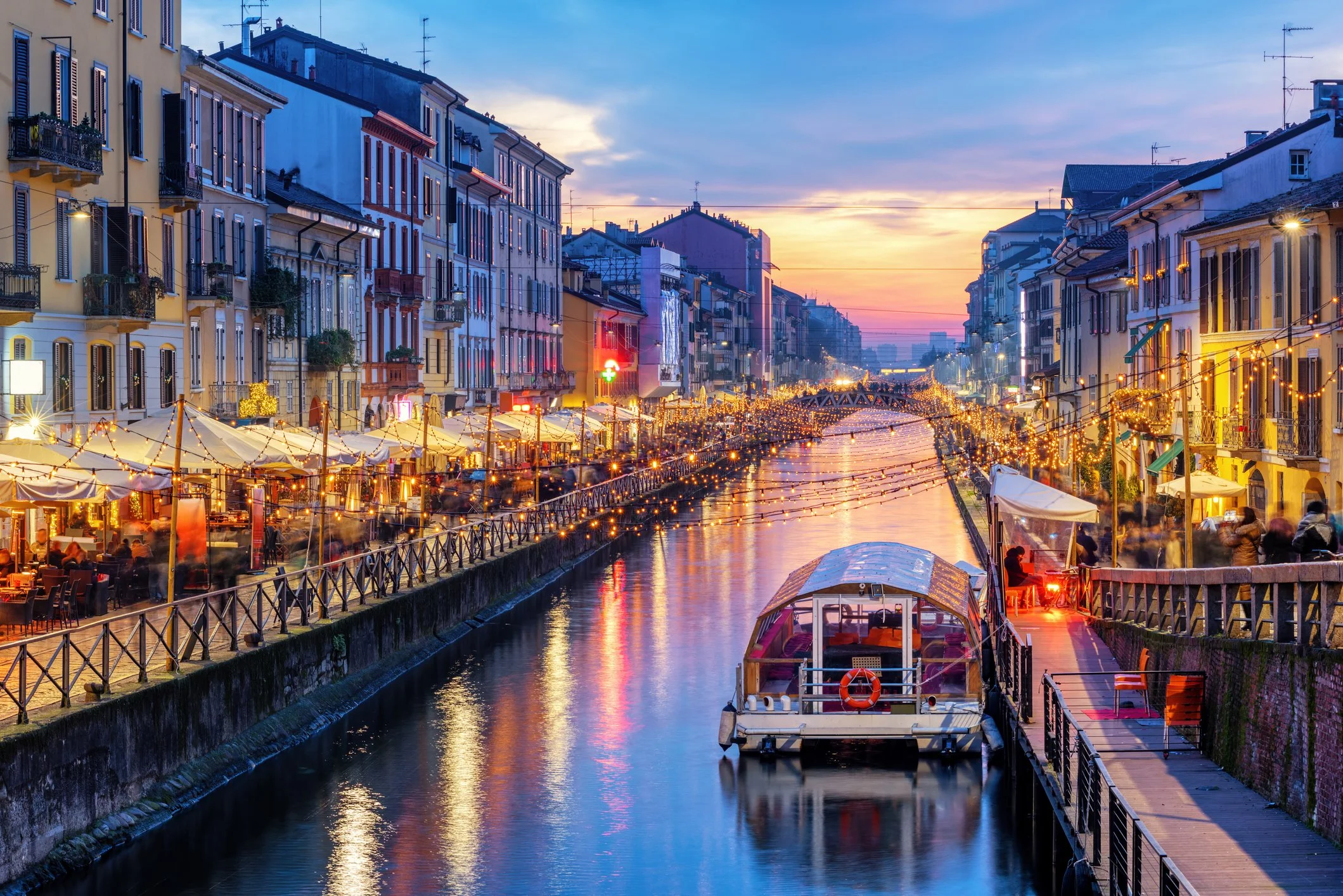
The Naviglio Grande Canal in Milan. Photo Credit: Xantana, iStock / Getty Images Plus
The Duomo complex—cathedral, spires, and adjacent Palazzo Reale—provides context for understanding Milan's role as both spiritual and cultural center. The cathedral's rooftop offers panoramic views that encompass both historic and modern Milan, while Palazzo Reale hosts world-class exhibitions that change seasonally.
"Arrivederci, Milano"
When Shostakovich's final notes fade into La Scala's looming silence, visitors carry away more than memories of a musical performance. They've witnessed cultural history being made, participated in traditions stretching back centuries, and experienced Milan's unique blend of artistic sophistication and urban energy.
La Scala's opening night succeeds because it enhances rather than overshadows the destination. Whether you come for Shostakovich's only surviving opera, Milan's renowned fashion and design leadership, or the city's distinctive culture that balances tradition with innovation, the experience resonates long after you return home.
The evening demonstrates how musical excellence, cultural depth, and northern Italian hospitality can create something approaching magic. From performing one of opera's most demanding works to preparing perfect risotto in a century-old trattoria, Milan during opera season celebrates human achievement in multiple forms.
Air Charter Guide ensures your journey matches the artistry you'll experience, providing flight services that cater to the demands of luxury travel, prioritizing both comfort and precision. La Scala awaits, and getting there should be as memorable as the destination itself.