Island Escape: The Maldives
/From the air, the Maldives looks less like a country than a scattering of turquoise rings. Roughly 1,192 coral islands are spread across 26 atolls in the Indian Ocean, south-southwest of India and Sri Lanka, and the average ground elevation sits around 1.5 meters, the lowest of any nation on earth. Each atoll is a reef rim enclosing a shallow lagoon ready to be explored, with pale islands set along the edge. Even the English word "atoll" was borrowed from Dhivehi, the Maldivian language.
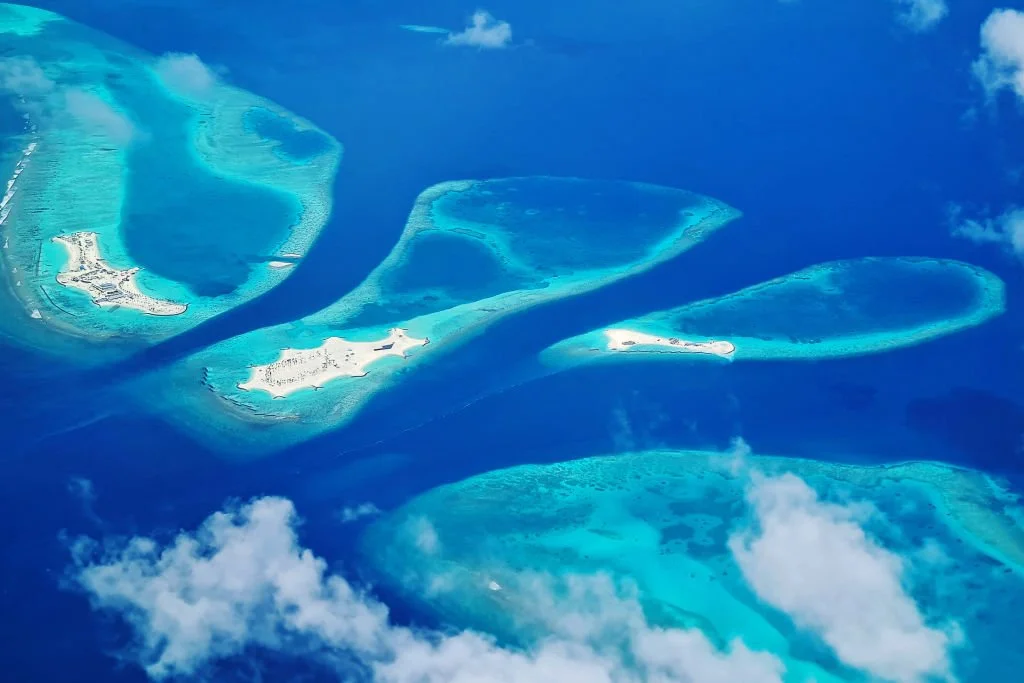
Aerial view of Maldives archipelago. Photo Credit AFP via Getty Images
Tourism here is younger than many of its guests. In February 1972, the Italian travel agent George Corbin arrived with the first group of visitors, mostly journalists and photographers. He promised to bring more if someone could give them a place to stay. A small group of young Maldivian entrepreneurs, among them Mohamed Umar Maniku and Ahmed Naseem, answered. On October 3, 1972, they opened Kurumba Village on a former coconut plantation island, naming it after the Dhivehi word for coconut. The first huts had coral walls, palm-frond roofs, and showers of diluted salt water. There was no dock, so guests waded ashore through waist-high water. The resort stayed fully booked for the rest of the year, and roughly 1,000 tourists visited the country in 1972.
What followed became the country's defining idea. The 1983 Tourism Master Plan formalized the "one island, one resort" model, in which each property occupies its own island, and no two hotels share a beach. In 1995, Sonu and Eva Shivdasani opened Soneva Fushi in Baa Atoll as the Maldives' first luxury resort, shifting the template from simple cabanas to a private-island hideaway. The scale has changed since Kurumba's thirty huts: 474,920 travelers arrived in January and February of 2026 alone.
An Archipelago Built for Arrival
Getting to the hotel is part of the journey in the Maldives. Realistically, you'll start at Velana International Airport (VRMM), which sits on its own island, Hulhulé, a short boat ride from the capital, Malé. Resorts in the atolls closest to Malé are reached by speedboat. Almost everything farther out depends on Trans Maldivian Airways, the world's largest seaplane operator, which now flies 66 de Havilland Twin Otters to more than 80 resorts. On February 15, 2026, the airline carried more than 7,000 passengers on over 800 takeoffs and landings in a single day, the busiest in its history. The planes set down on the resort lagoon itself, and from the air the atolls finally make sense.
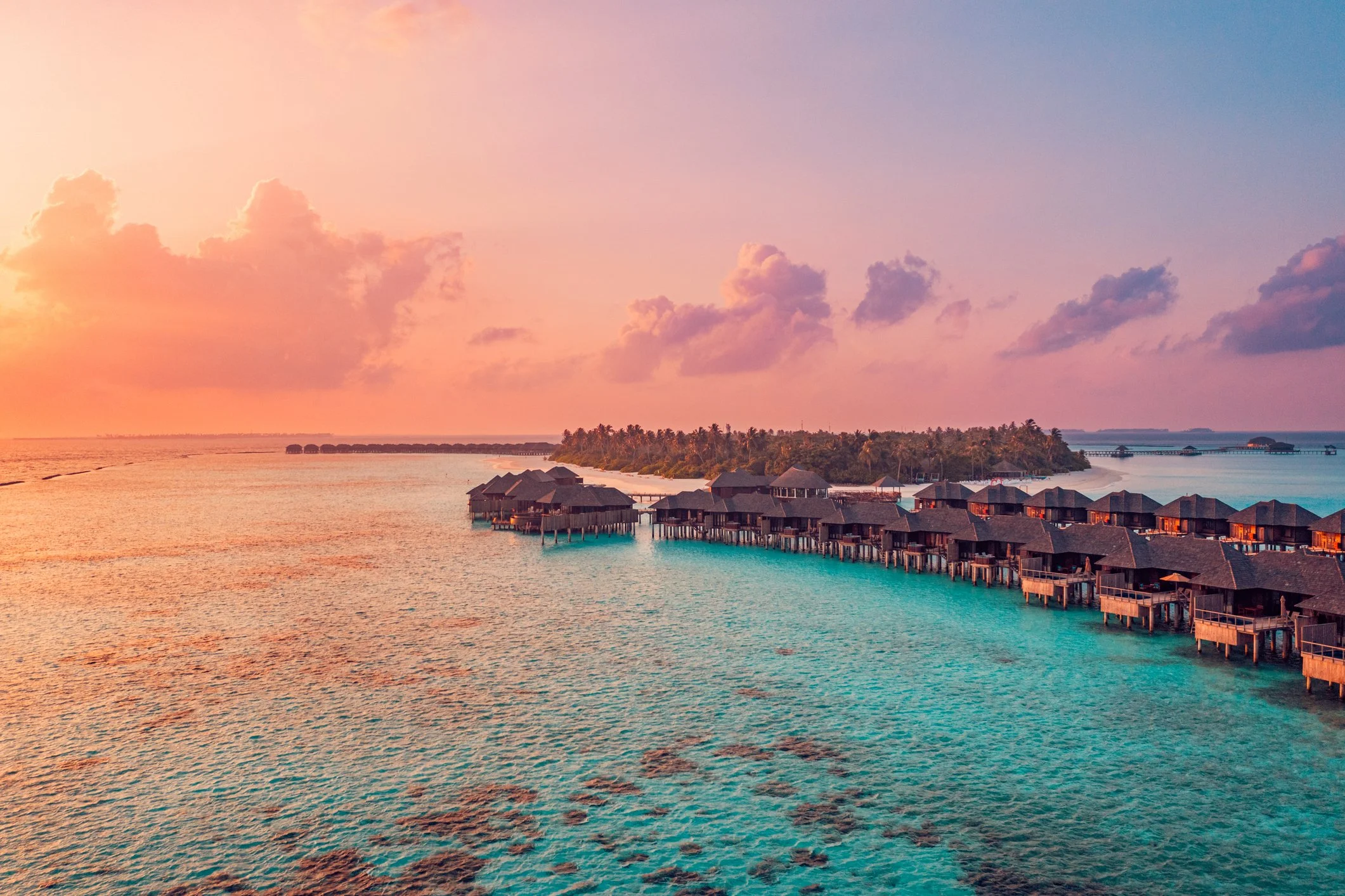
Maldives villas at sunset. Photo Credit: Levente Bodo, Getty Images
The seaplanes fly in daylight only. A long-haul arrival that lands after about 3 p.m. usually means a night near the airport before the final leg, so the arrival time shapes the first day.
The season matters as much as the hour. The dry northeast monsoon, known locally as iruvai, runs roughly from December to April and brings calm seas, low humidity, and long stretches of sun, while the wetter southwest monsoon, hulhangu, covers May through November. Entry is simple for Americans: a free 30-day visa is issued on arrival with a passport valid for at least six months and proof of onward travel, and every visitor completes the online IMUGA declaration within 96 hours before departure. Resort guests also pay a $12 green tax per person per night, a 17 percent tourism goods and services tax applies, and passengers leaving Velana by private jet pay $960 each in combined departure tax and airport development fees.
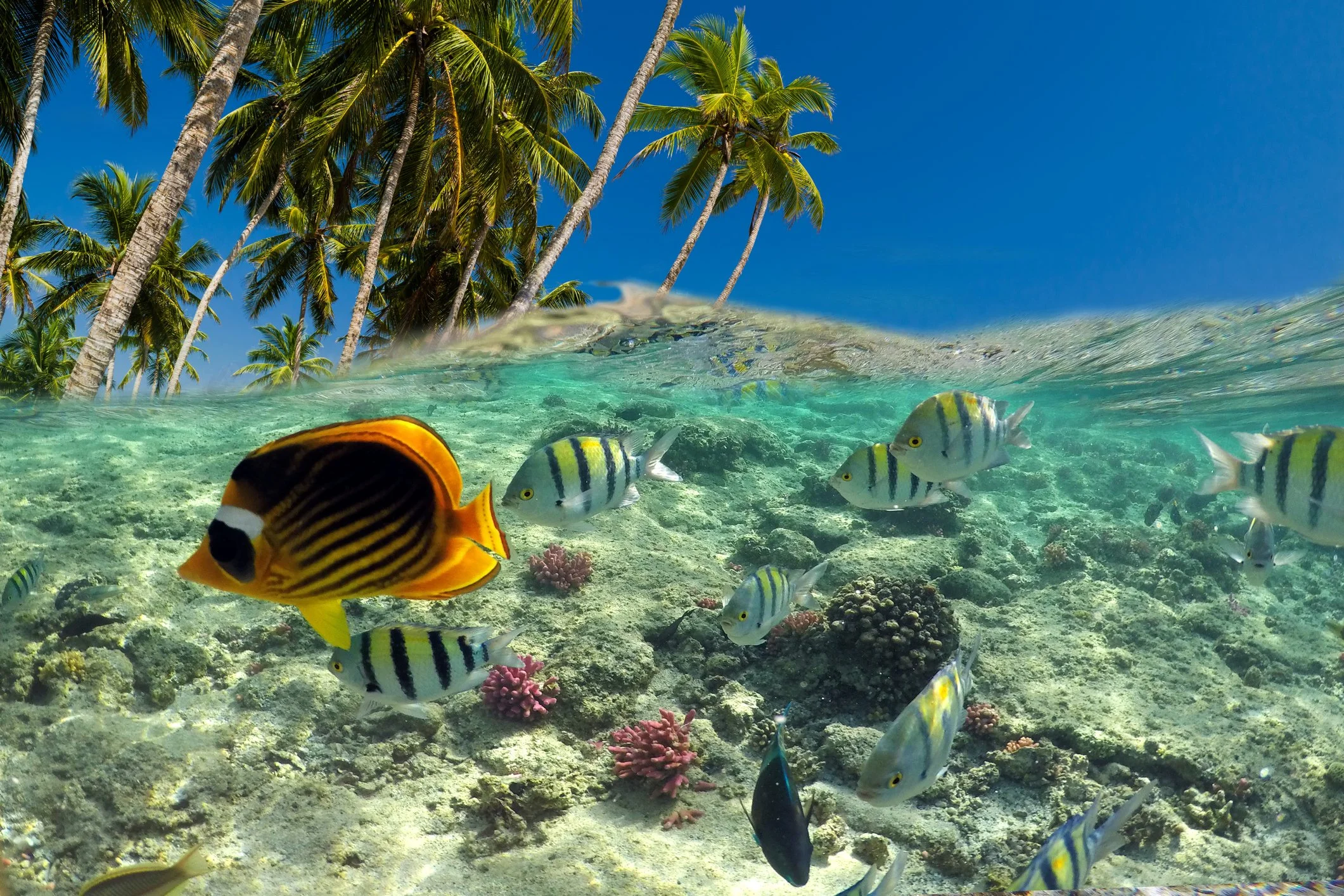
Tropical Fish, Maldives. Photo credit: Anton Petrus, Getty Images
Where to Stay
Soneva Fushi
Soneva Fushi occupies Kunfunadhoo, a jungled island in Baa Atoll about 30 minutes by seaplane from Malé. Sonu and Eva Shivdasani opened it in 1995 under a house rule that still holds: "No News, No Shoes," and guests go barefoot for the entire stay. The island sits inside the Baa Atoll UNESCO Biosphere Reserve, designated in 2011. Eco Centro, the country's first integrated waste management center, opened here in 2007, and glass bottles from Soneva and neighboring resorts are melted down and reshaped in the Maldives' only hot glass studio.
Sixty-plus thatched-roof villas, from one to nine bedrooms, are spaced along the coast and tucked into the jungle edge, each with its own stretch of beach. On the lagoon side, eight Water Retreats of more than 6,000 square feet each were billed as the world's largest overwater villas when they opened, each with a private pool and a slide that drops straight into the sea. The rest of the island leans toward whimsy: an open-air Cinema Paradiso on the sand, complimentary chocolate and ice cream rooms, and an observatory for reading the equatorial sky. The MICHELIN Guide awarded Soneva Fushi Three Keys, its highest hotel distinction, in 2025 and again in 2026.
Cheval Blanc Randheli
Cheval Blanc Randheli is the counterpoint: French, precise and quietly theatrical. LVMH opened its second Cheval Blanc Maison, after Courchevel, on November 15, 2013, on Randheli island in Noonu Atoll, roughly 40 minutes north of Malé aboard the hotel's own seaplane. Belgian architect Jean-Michel Gathy, who had already designed One&Only Reethi Rah, drew the villas as contemporary versions of the island's palm-thatched cabanas, blending European craftsmanship with an Asian sense of space.
Today the island holds 46 whitewashed, palapa-topped villas, set over the water or framing the lagoon and garden, each with an infinity pool deck that slopes toward the sea. The interiors carry a signature "Pop Yellow" against local craftsmanship and contemporary art. The spa claims an island of its own, reached by traditional dhoni sailing boat, with tailor-made treatments by Guerlain. Like Soneva Fushi, it holds Three MICHELIN Keys.
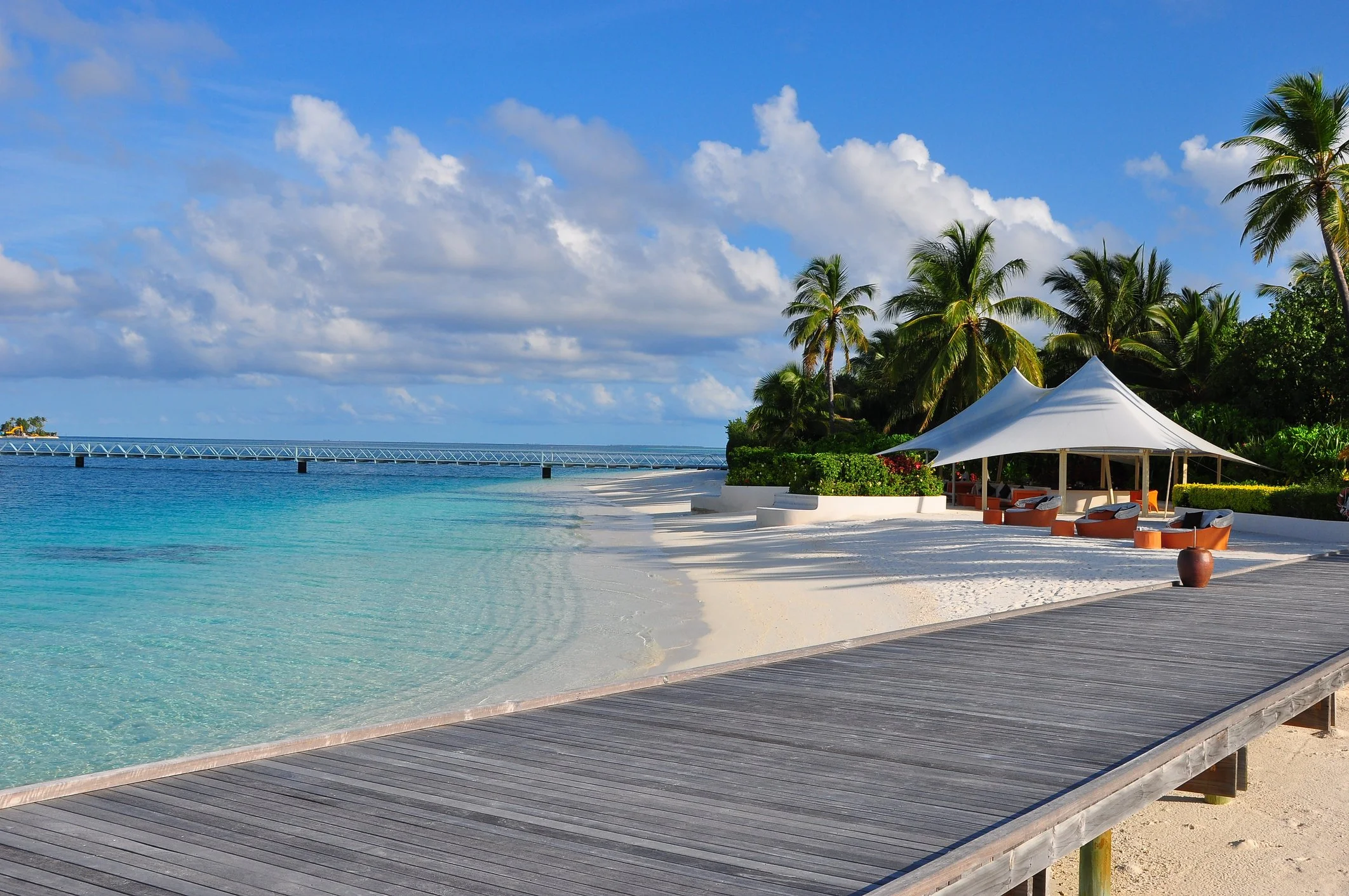
Maldives, Conrad Rangali. Photo Credit: Suilenroc, Getty Images
Where to Eat
With one resort to an island, nearly every serious restaurant in the Maldives belongs to a hotel, and most are reserved for that hotel's guests. The exceptions are rare enough to plan a day around.
Ithaa Undersea Restaurant
The most famous sits five meters below the surface at Conrad Maldives Rangali Island in South Ari Atoll. Ithaa, Dhivehi for "mother of pearl," opened on April 15, 2005, as the world's first all-glass undersea restaurant. New Zealand firm M.J. Murphy designed it; they built the structure in Singapore from American acrylic, shipped the finished room across the Indian Ocean, and set it onto the reef. Inside, a curved transparent arch wraps just 14 diners in a 270-degree view of coral and passing reef fish. Lunch runs to four courses, and dinner to seven, and guests staying on other islands can book a seaplane transfer for the meal.
Le 1947
Le 1947 at Cheval Blanc Randheli takes its name from the most celebrated vintage of Château Cheval Blanc, the Saint-Émilion estate, and shares it with Yannick Alléno's three-Michelin-star dining room at Cheval Blanc Courchevel. In the Maldives, the room faces a tropical garden instead of the Alps, and the French cooking arrives as a long chef's dégustation. For the resort's tenth anniversary in November 2023, the kitchen served a dinner fusing Provençal and Maldivian flavors. La Liste named it among its top restaurants in both 2025 and 2026. The table is reserved for resort guests, and the dress code is island chic.
A few customs rules apply across the country and are worth keeping in mind. Alcohol is served only on licensed resort islands and liveaboards; you cannot bring it into the country, and none may be carried onto inhabited islands, Malé included. Resort bills add a 10 percent service charge, shared among staff, on top of the 17 percent tourism tax, so an extra cash tip is a gesture rather than an obligation. Be aware that more modest dress is expected whenever guests leave the resort for a local island.
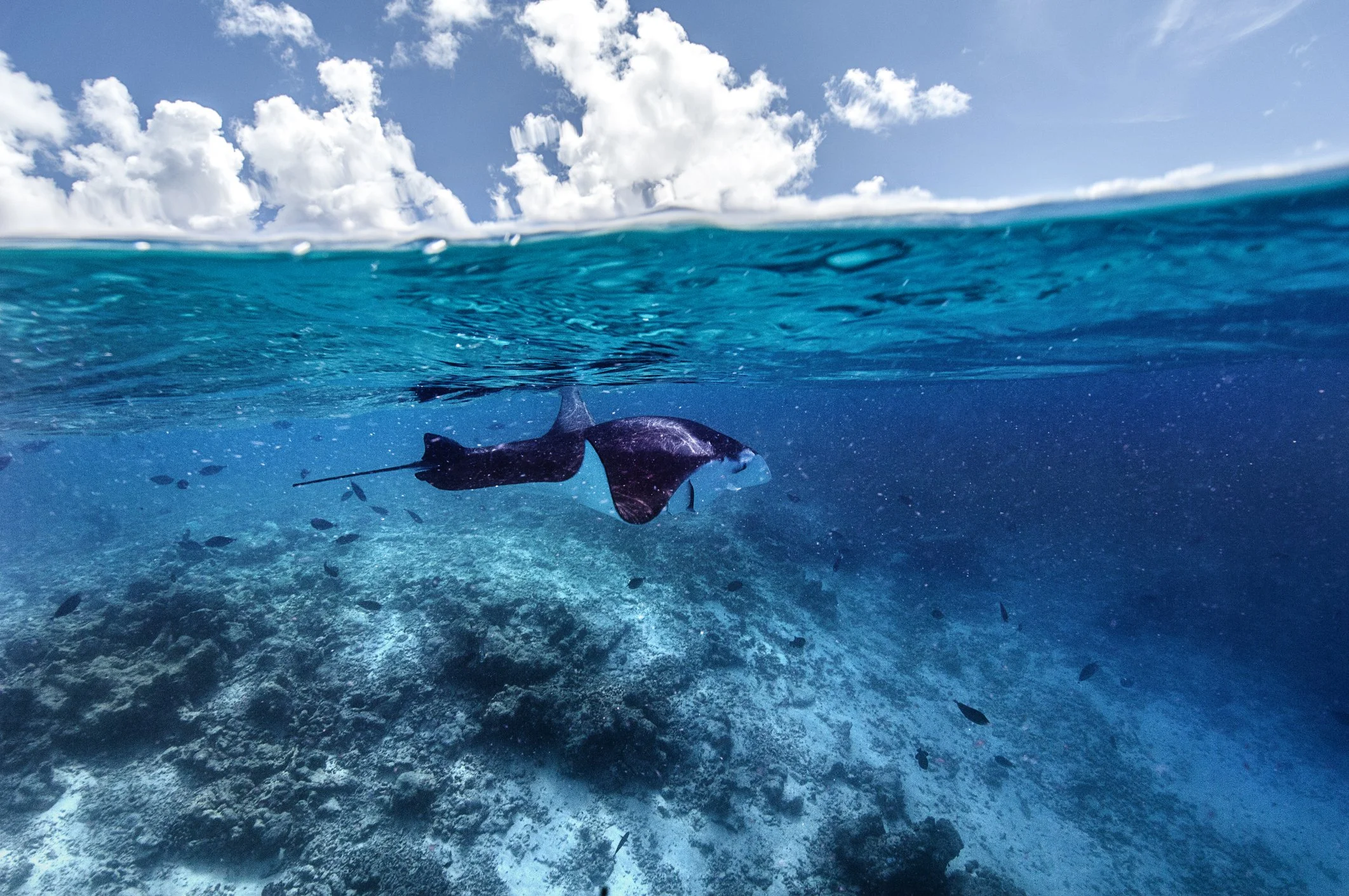
Manta Ray seen at Hanifaru Bay, Maldives. Photo Credit: Giordano Cipriani
Beyond the Lagoon
December shifts the wildlife calendar toward the central atolls. Manta rays gather at the cleaning stations of South Ari Atoll from roughly November to March, and the same atoll holds the South Ari Marine Protected Area, declared in 2009 along its southern rim, where a resident population of whale sharks is seen in every month of the year. For guests at Conrad Rangali, the largest fish in the sea lives in the same atoll as lunch at Ithaa.
Malé repays a morning ashore. The Hukuru Miskiy, or Old Friday Mosque, was built between 1656 and 1658 under Sultan Ibrahim Iskandhar I from interlocking blocks of carved coral, with lacquered woodwork inside and a cemetery of coral headstones within its walls. It sits on UNESCO's tentative list as part of the Coral Stone Mosques of Maldives, and non-Muslim visitors may enter with permission outside prayer times.
Travelers who fall for Baa Atoll will find a reason to return in summer. From roughly May to November, Hanifaru Bay, a core zone of the biosphere reserve and the site of the largest documented reef manta feeding aggregation in the world, fills with plankton and draws hundreds of rays at once. Snorkeling is tightly managed there, and diving is prohibited.
The Case for December
Dry skies. Flat, clear water. A seaplane window that turns the atolls from a map into a place. Barefoot evenings on Kunfunadhoo, a garden table at Randheli, lunch beneath five meters of ocean at Rangali. The dry season opens in December, and the islands are at their clearest.
To make your journey as seamless as the adventure itself, trust Air Charter Guide for comprehensive, up-to-date flight booking information, so every step of your travel is smooth and stress-free. Velana International Airport sits on its own island, and a landing by early afternoon leaves time to reach the outer atolls by seaplane before dark, so let Air Charter Guide help you get there.