Grateful Deadhead: Navigating Empty Legs
/The COVID-19 pandemic may have wreaked havoc on many industries, but private jet travel was not one of them. Individuals wishing to avoid large crowds at airports and other passengers up close, emboldened with a new acceptance of remote work, decided to take the plunge on flying private. After business jet departures tumbled in 2020 following global shutdowns and restrictions, the industry experienced more than a rebound in 2021, with the number of flights increasing by more than 7 percent over the end of 2019.
By the end of 2025, departures of private jets operated as charter or fractional ownership charter flights soared by more than 30% from 2019 levels, and while there have been some variations along the way, the general trend seems to be upward. While flying private may not be for everyone, it appears to be for more people than previously assumed.

Colleagues discuss financials on Private jet. PHoto Credit: Bogdan Malizkiy, iStock / Getty Images Plus
That having been said, given the financial commitment represented by a private jet flight, many of the would-be newbies are looking to dip their toes in rather than dive in fully. One way to do this is to search for “deadheads” – otherwise empty flights occurring solely to reposition planes to more desirable locations. These “empty legs” can offer the opportunity to fly private much more cheaply than usual; however, they come with certain complications of which potential participants should be aware. If you’d like to more know about filling up empty legs, read on.
Emptiness As Old as Time
The phenomenon of deadhead flights goes back to the dawn of charter aviation and relates to the distinctive nature of that section of the aviation industry. Passengers on scheduled service airlines buy the right to fly in whichever aircraft (within reason) that an airline assigns among given points. Those aircraft fly in pre-set routes at pre-set times (weather/machinery/crew permitting) and go where the airlines need them.
With charter aviation, on the other hand, passengers are purchasing the right to fly in a specific plane (or at least specific type of plane) at their own time. Once they step off of their private jet, operators and brokers either need to find a place to store the plane waiting for a return flight or find something else to do with it. The former costs money, while the latter holds the potential for profit.
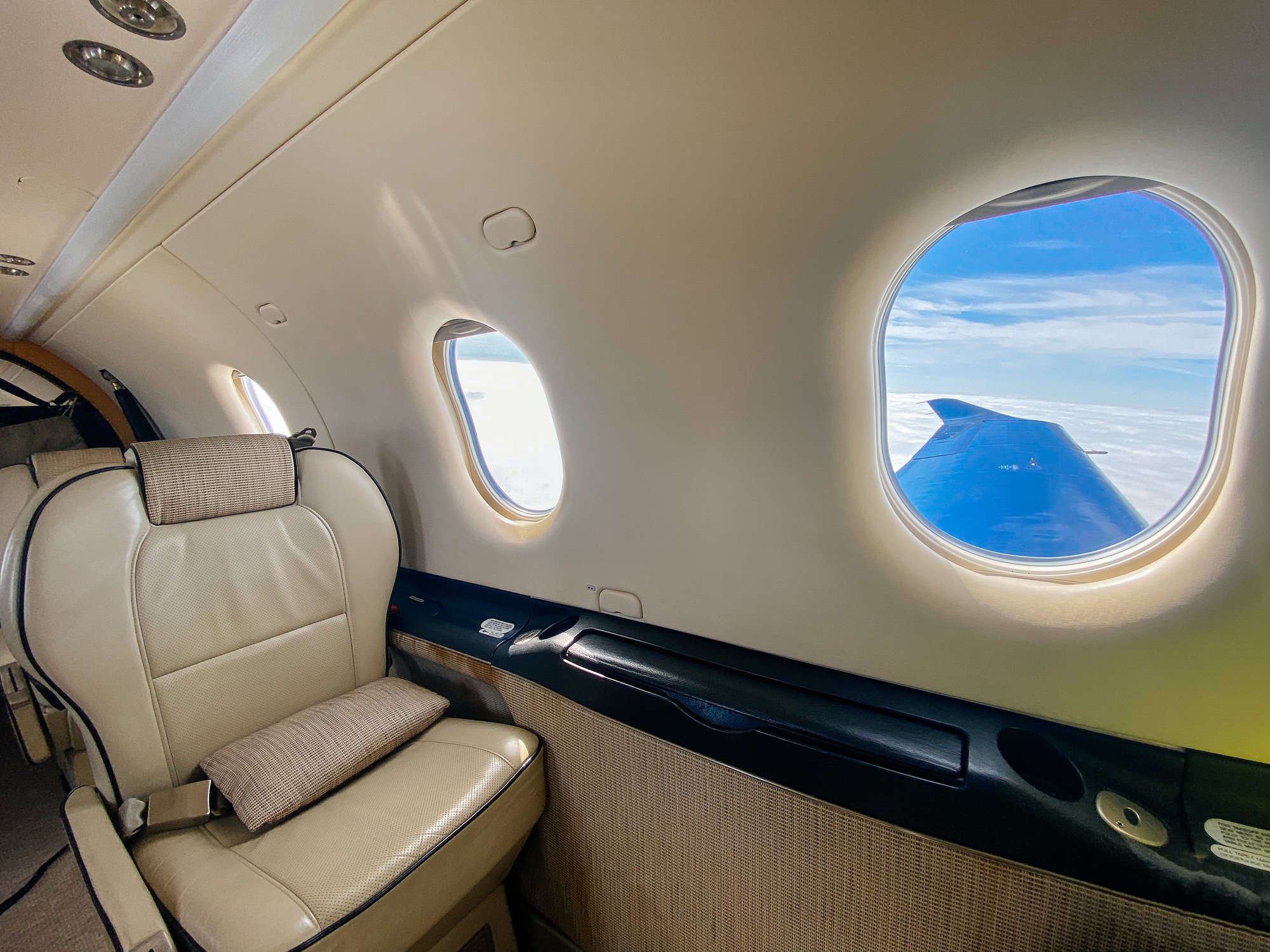
PRivate Jet EMPTY LEG FLIGHT. Photo Credit: Alex Walker, iStock / getty Images plus
Not infrequently, in order for that plane to meet its next commitment, it needs to be someplace else, on a timeframe and/or via a route that does not necessarily appeal to regular charter customers. The exact number of these “repositioning” flights isn’t tracked precisely, but industry experts estimate it to be 30% to 40% of all business jet flights (at least in North America, which represents more than two-thirds of the private jet travel market worldwide).
Companies offering private jets for charter quickly figured out that they could repackage these repositioning flights as a travel opportunity…for a discount.
Flying Private on the Cheap?
The exact savings offered on empty leg flights varies widely, but can be significant – for some routes, up to 75% off typical rates, for others, 25% to 50%. For larger groups, the per-person savings can be even more significant. While this doesn’t push private jet travel down to the basic economy level of affordability, it does make the pricing somewhat more competitive versus first-class airline tickets.
For example, as of late May, empty leg aggregator SkyAccess.com offered a Houston to Denver flight leaving the afternoon of July 17 for a total of about $13,480 for up to 10 passengers, or about $1,348 per person. In comparison, a first-class ticket on United Airlines for the same date and time period was estimated to cost about $768, with the price rising to $1,038 for a fully refundable option.
Similar to fractional charter programs such as NetJets, empty leg flights can seem like a natural on-ramp for those unsure about making the shift to private jet travel. The advent of the Internet has especially broadened the opportunities for communicating deadhead options to the public at large.
Individual charter companies such as Stratos Jets and ABS Jets let potential customers search for empty leg options on their own Websites, while services such as the aforementioned SkyAccess provide access to opportunities from multiple sources. Travelers can seek out empty leg options on broader charter booking apps such as XO, buy a membership on Vaunt to obtain free empty leg flights in the U.S., or turn to Catch a Jet for options in the UK and Europe.
“It’s become a significant part of the market,” says charter aviation consultant Paul Travis. “People have gotten more effective at marketing empty legs, and you can end up paying a good one-way price on those flights.”
Don’t Think Too Far Ahead
That having been said, empty legs have their own tradeoffs that interested parties should know about in advance. You are operating on someone else’s schedule – and if that schedule changes dramatically, your wonderful empty leg opportunity may vanish. Though private jets are typically described as “business” jets, business travelers typically need more certainty than empty legs can offer, largely limiting them to leisure travelers.
“All one-way flights tend to come with some hair on them one way or another,” Travis points out. “It requires someone else to do the other bit, and if they cancel, the whole thing usually falls apart.”

Private Jet Scheduling. Photo Credit: Yoh4nn, iStock / Getty Images pLUS
For those used to scheduled service airlines, in which a ticket represents a firm commitment by the other party to move you to point B from point A, the relatively uncertain world of empty leg travel can feel rather disconcerting. Also, while booking weeks or months ahead typically gives you optimum choices and prices on airlines, the details of charter flights are more likely to change the farther you go out, making empty legs a better fit for trips in the very short term than they are for the long term. (That July 17 Houston-Denver flight may be a distant memory by the time Independence Day rolls around.)
Not Quite the Same
While those unfamiliar with the up-close experience of flying private may visualize a lavish experience, private jets are not infrequently less equipped with bells and whistles than newer commercial jets. Food options are extra, wi-fi may be spottier and passengers may not be able to stand up fully.
Usually, the big advantage of flying private isn’t the surroundings – it’s the logistics. Rather than fitting their travel needs to someone else’s schedule, charter flyers can pick the time, day and location of their departure and arrival with a fair amount of specificity (weather permitting). Flying private’s main luxury for the bulk of travelers centers around the convenience – something empty leg customers typically must forego. While deadhead flyers do still get to avoid early arrivals to the airport, long security lines and large crowds, that may be offset by the inconvenience of the flight timing itself.
For many empty leg travelers, the advantages more than outweigh the offsetting factors. In a broader sense, though, the normalization of empty leg traveling can be seen as reducing the mystique still present around charter aviation.
“Does it not logically follow that, as people get more and more access to the business jet product, it becomes less of a special event?” Travis muses. “You’re now pricing a premium product in a Southwest Airlines way, meaning flying is purely about getting you from point A to point B in an affordable fashion.”
The Future Is Artificial?
Mystique or not, demand for empty leg flights is expected to keep growing. The permanent establishment of 100% bonus depreciation in 2025’s One Big Beautiful Bill Act means that U.S. taxpayers can deduct the entirety of their depreciation on certain large assets in the first year after purchase…if those assets are used for business purposes. For private jets, that means making them available for charter by travelers other than their owners. The more flights taken by charter customers rather than plane owners, the greater the need for repositioning – and thus empty legs.
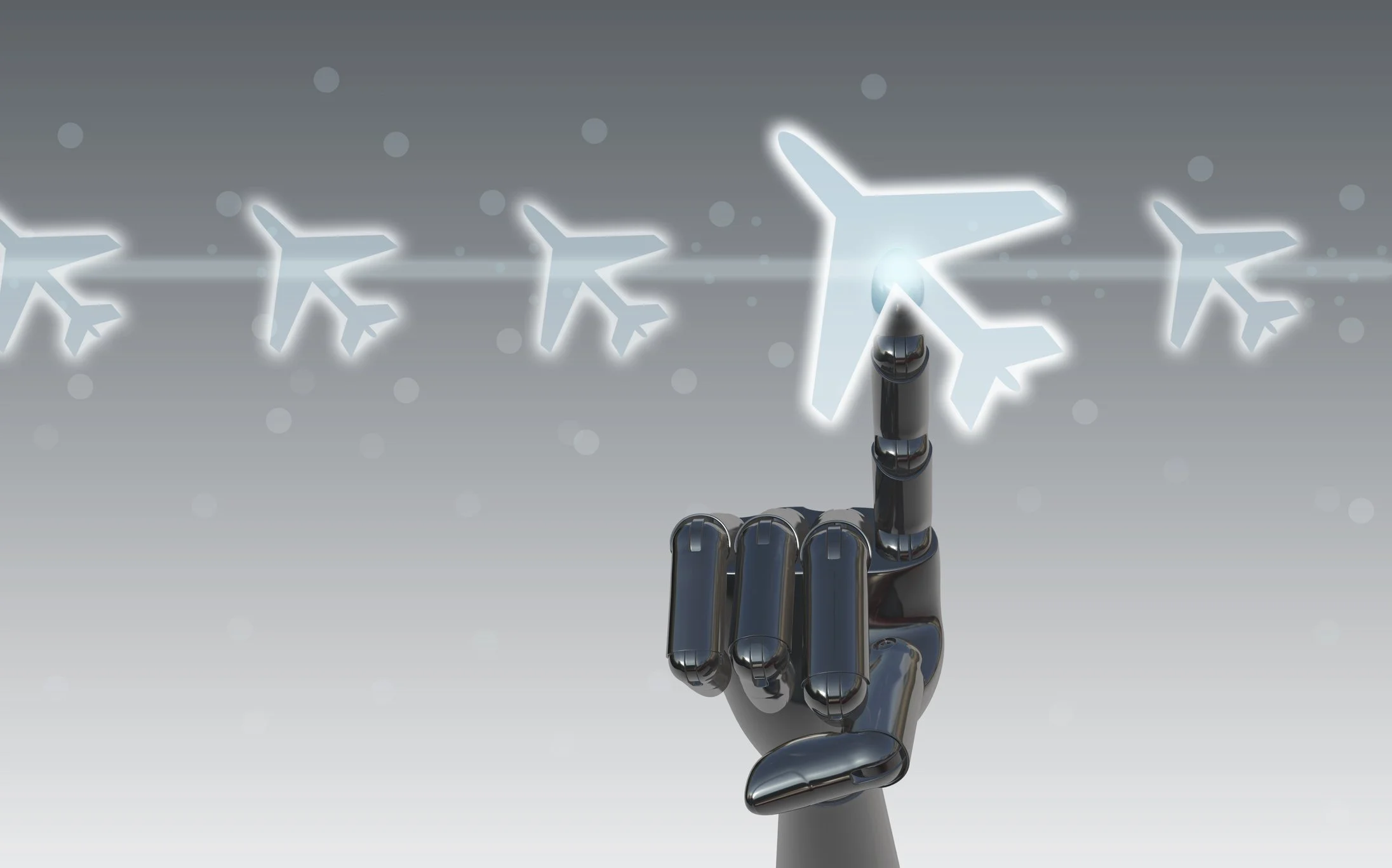
AI CHarter SCHEDULING Concept. Photo Credit: Fatido, iStock / Getty Images Plus
And, while artificial intelligence may be leading to general uncertainty in global markets, it offers the promise of being able to synthesize the vast amount of information in the charter aviation market more effectively in a way that could allow for smoother scheduling and more widespread familiarity in relation to deadhead flights.
“It used to take a whole lot of work to research factors involved in empty legs. AI could take a lot of work out of that,” Travis says. “AI has the potential for making all of these empty legs into a sustainable long-term business model.”