Bollywood & Beyond
/No film industry on earth is as closely tied to a single city as Bollywood is to Mumbai. The name itself, a blend of "Bombay" and "Hollywood," speaks to that relationship, and the Hindi-language film industry has grown into one of the world's most prolific, producing stars whose fame rivals anyone in Los Angeles. For the traveler, Mumbai offers something rare: the chance to experience a global entertainment industry in the city where it was born, where it is still made, and where audiences still treat a trip to the cinema as a communal event.
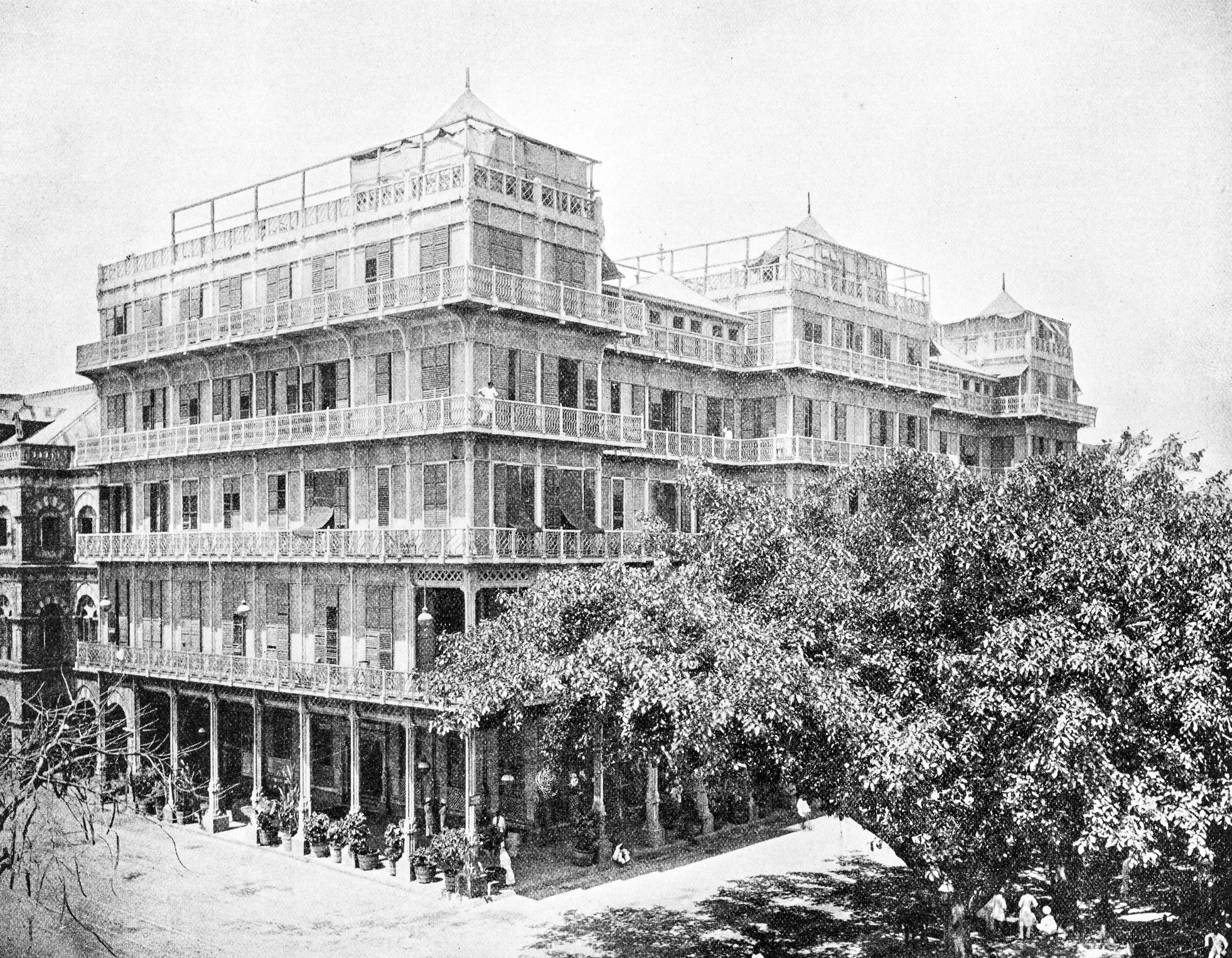
The Esplanade (Watson's) Hotel, Bombay, in 1895. Photo credit: ilbusca, getty Images
The story begins on July 7, 1896, when an agent for the Lumière brothers screened six short films at Watson's Hotel, the first time moving pictures were shown in India. Seventeen years later, Dadasaheb Phalke, now remembered as the father of Indian cinema, released Raja Harishchandra. The silent, 40-minute film premiered on April 21, 1913, and is widely regarded as India's first full-length feature. Because acting was not considered acceptable work for women at the time, the cast was entirely male. Sound arrived on March 14, 1931, when Ardeshir Irani's Alam Ara opened at Bombay's Majestic Cinema to crowds so large that police were called in to restore order. The film featured songs as well as dialogue, and the music-driven format that defines Bollywood took shape in the decades that followed.
That legacy is formalized at Film City in Goregaon East, officially the Dadasaheb Phalke Chitranagari. Established by the Maharashtra state government in 1977 with backing from filmmaker V. Shantaram, producer B.R. Chopra, and actor Dilip Kumar, the complex spans more than 520 acres. It includes 42 outdoor shooting locations and 16 sound stages. Permanent sets include temples, courtrooms, villages, gardens, and artificial lakes and waterfalls, and the complex has hosted countless film and television productions over nearly five decades. Renamed in Phalke's honor in 2001, the complex offers guided tours that let visitors see the industry's working heart.
Where to Stay
Few hotels anywhere can claim a history as layered as the Taj Mahal Palace. Commissioned by industrialist Jamsetji Tata, the hotel opened to its first 17 guests on December 16, 1903, more than two decades before the neighboring Gateway of India was built. For years, it was the first landmark arriving ships saw from the harbor. Indian architects Sitaram Khanderao Vaidya and D.N. Mirza designed the original, and after Vaidya's death, English engineer W.A. Chambers completed the building while retaining nearly all of Vaidya's features. The result blends Moorish domes, Florentine Renaissance detailing, and Rajput influences into a structure unlike anything else on the Colaba waterfront.
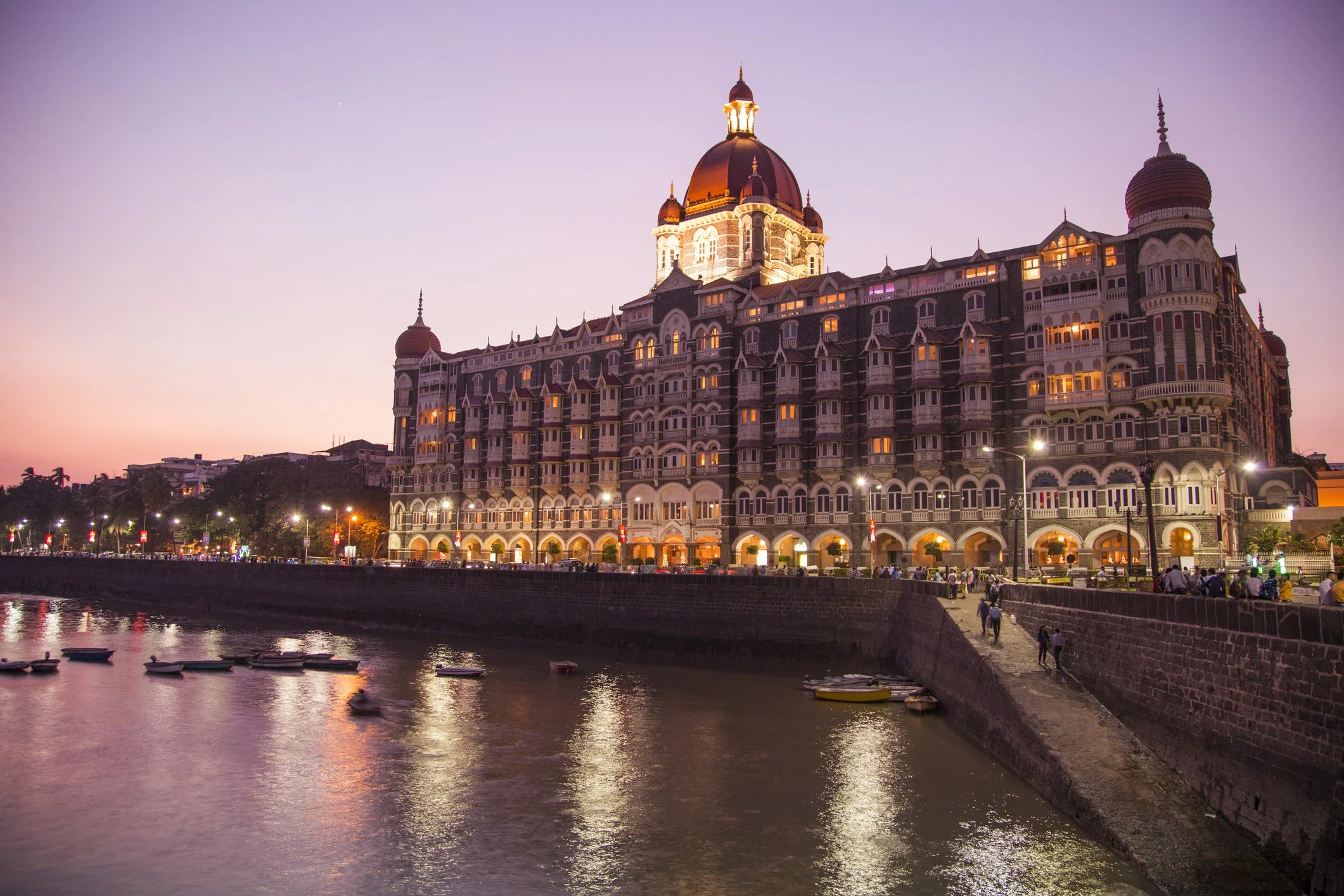
The Taj Mahal Palace Hotel at Dusk. Photo Credit: Holger Leue, Corbis / Getty Images
The hotel was ahead of its era from opening day. It was the first in India with electricity and offered American ceiling fans, German elevators, and Turkish baths. A widely repeated story holds that Tata built it after being turned away from Watson's Hotel, which admitted Europeans only, though historians dispute the account. Either way, the connection fits a cinema-focused trip, since Watson's is where India first saw films. Independence-era figures including Mohammed Ali Jinnah and Sarojini Naidu held court in its suites. Today the property comprises the original Palace wing and the Tower, added in 1972, and the Palace wing's heritage rooms and suites remain the signature experience.
For guests who would rather stay in Bollywood's living neighborhood than its historic core, Taj Lands End in Bandra West is the natural choice. The hotel sits at the Bandstand end of the Bandra waterfront, overlooking the Arabian Sea and the Bandra-Worli Sea Link, with nearly 500 rooms and suites oriented toward the water. The location is the draw. Mannat is Shah Rukh Khan's seaside residence and one of India's most photographed celebrity addresses. The house is currently being renovated and expanded, with work reportedly expected to finish by the end of 2026.
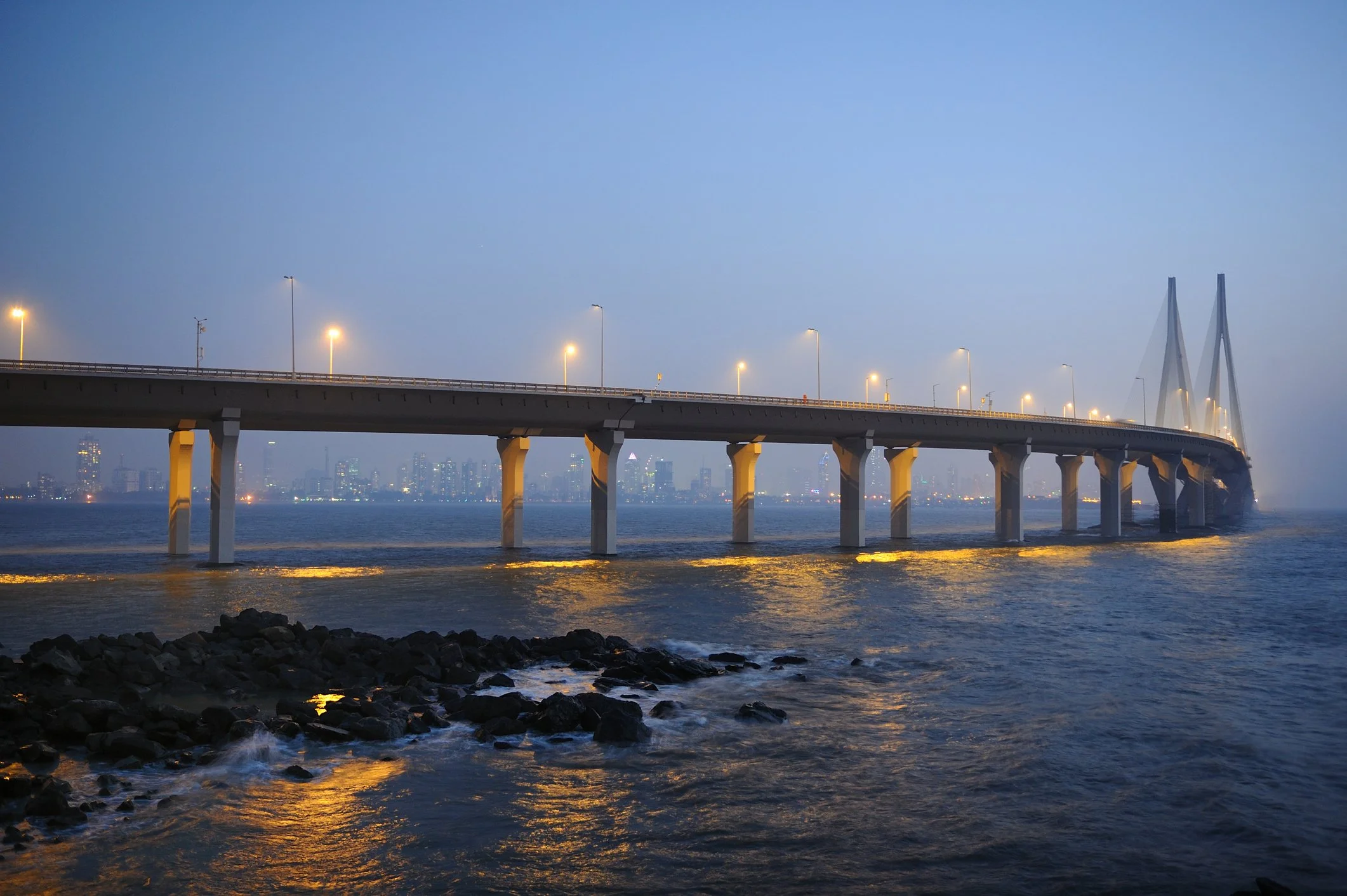
The Bandra-Worli Sea Link, MumBAI. Photo Credit: Soltan Frederic, Getty Images
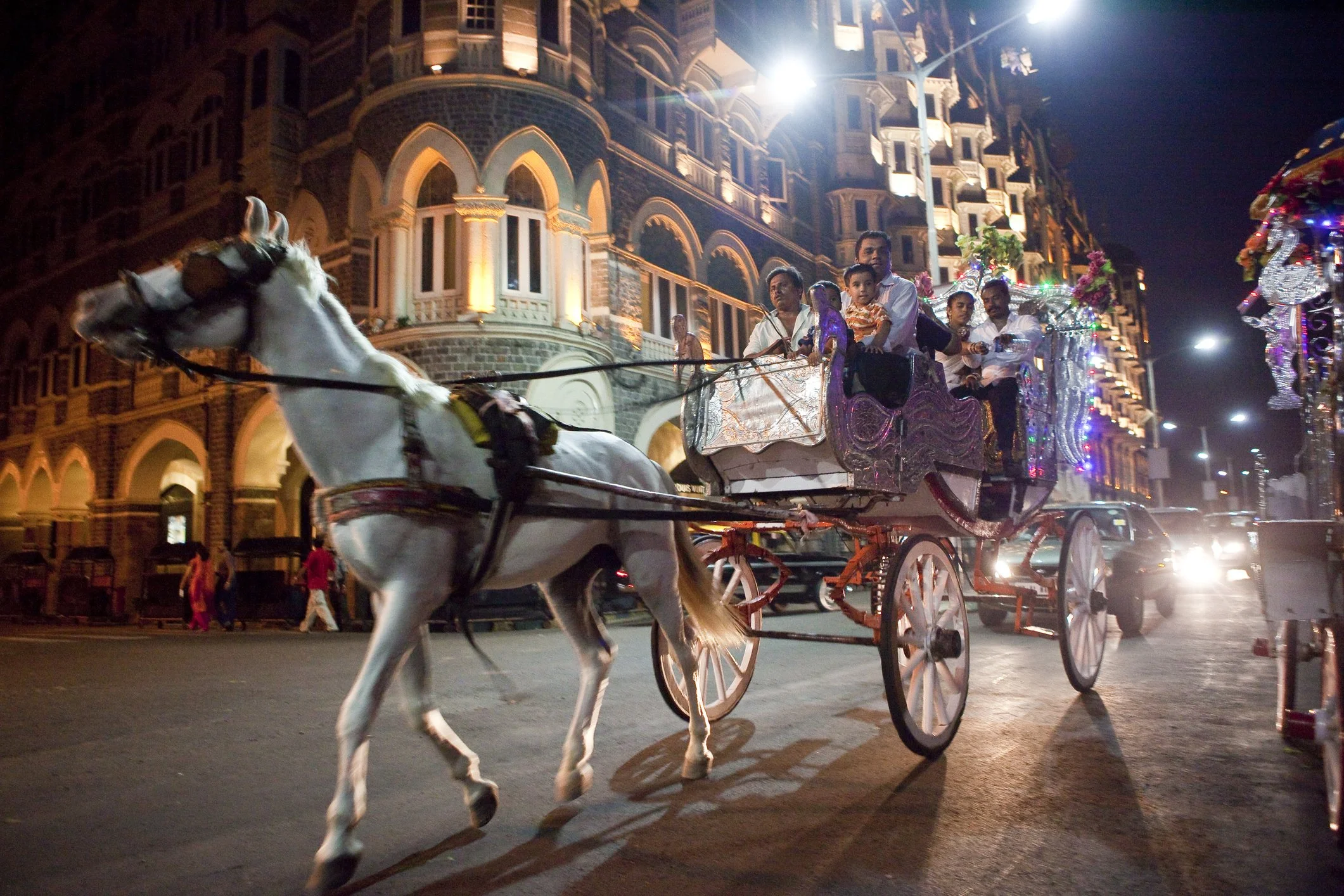
Just beyond the hotel, the Castella de Aguada, a Portuguese watchtower built in 1640, has appeared in films including Dil Chahta Hai and Jaane Tu... Ya Jaane Na. Within the hotel, Masala Bay serves refined Indian cuisine, Ming Yang covers Asian flavors, and Vista offers panoramic sea views. The J Wellness Circle spa specializes in Ayurvedic treatments, and guests can tour Bandra by Victoria carriage, a nod to the city's colonial-era street life, or play on the property's seaside padel and pickleball courts.
Where to Eat
Masque has spent the better part of a decade as India's most decorated restaurant. Opened in 2016 under self-taught restaurateur Aditi Dugar, it introduced a tasting-menu-only format to Mumbai at a time when the concept barely existed in India. The dining room occupies part of the Laxmi Woolen Mill, a former textile mill in Mahalaxmi, and its seasonal 10-course menu centers on Indian produce, with vegetarian and non-vegetarian options. The bar program draws on Ayurvedic philosophy, and the Masque Lab, a 12-seat research kitchen opened in 2020, doubles as a private dining room for experimental dinners.
Head chef Varun Totlani, a Mumbai native trained at the Culinary Institute of America in New York, has been with Masque since the beginning, rising from commis chef to lead the kitchen in 2022. His cooking leans on fire and the grill, with dishes such as smoked pork with Kashmiri chili and poha. In 2026, Masque placed No. 15 on Asia's 50 Best Restaurants, was named the Best Restaurant in India for the fifth consecutive time, and became the first Indian restaurant to win the list's Art of Hospitality Award. Dinner runs Tuesday through Sunday, and reservations should be made well in advance.
Papa's offers the opposite of formality, which is exactly its appeal. The 12-seat chef's counter sits in the rafters of an 80-year-old former bakery above Veronica's sandwich shop in Bandra's Ranwar village, a pocket of narrow cobbled lanes. It comes from Hunger Inc. Hospitality, the group behind The Bombay Canteen and O Pedro. It is led by executive chef Hussain Shahzad, who worked with the Oberoi Group and spent a year at New York's Eleven Madison Park before returning to Mumbai in 2015. Condé Nast Traveler named him Chef of the Year in 2023.
The restaurant honors the late chef Floyd Cardoz, Shahzad's mentor and a Hunger Inc. co-founder, whom the team called Papaji. One signature course, a watermelon rasam with Himalayan trout, reinterprets Cardoz's celebrated watermelon curry from his New York restaurant Tabla. Designer Shonan Purie Trehan styled the room after an old Bandra home, and salvaged the counter and bar top from Canteen. Expect playful cooking, including a rabbit shawarma the kitchen calls the Bugs Bunny, along with card tricks from the general manager and a 2000s pop playlist. Papa's Place is No. 6 on the 2026 Asia's 50 Best extended list, and with only 12 seats per service, a booking is an accomplishment in itself.
Beyond the Studio Gates
No Bollywood trip is complete without a morning at Maratha Mandir in central Mumbai. The single-screen cinema has shown Dilwale Dulhania Le Jayenge daily since the film's release on October 20, 1995, making it the longest-running film in Indian cinema history. The Shah Rukh Khan and Kajol romance marked 30 years in theaters in October 2025, and fans still buy tickets for its daily morning show. When a blockbuster release crowded the schedule in March 2026, management moved the screening earlier by half an hour rather than drop it.
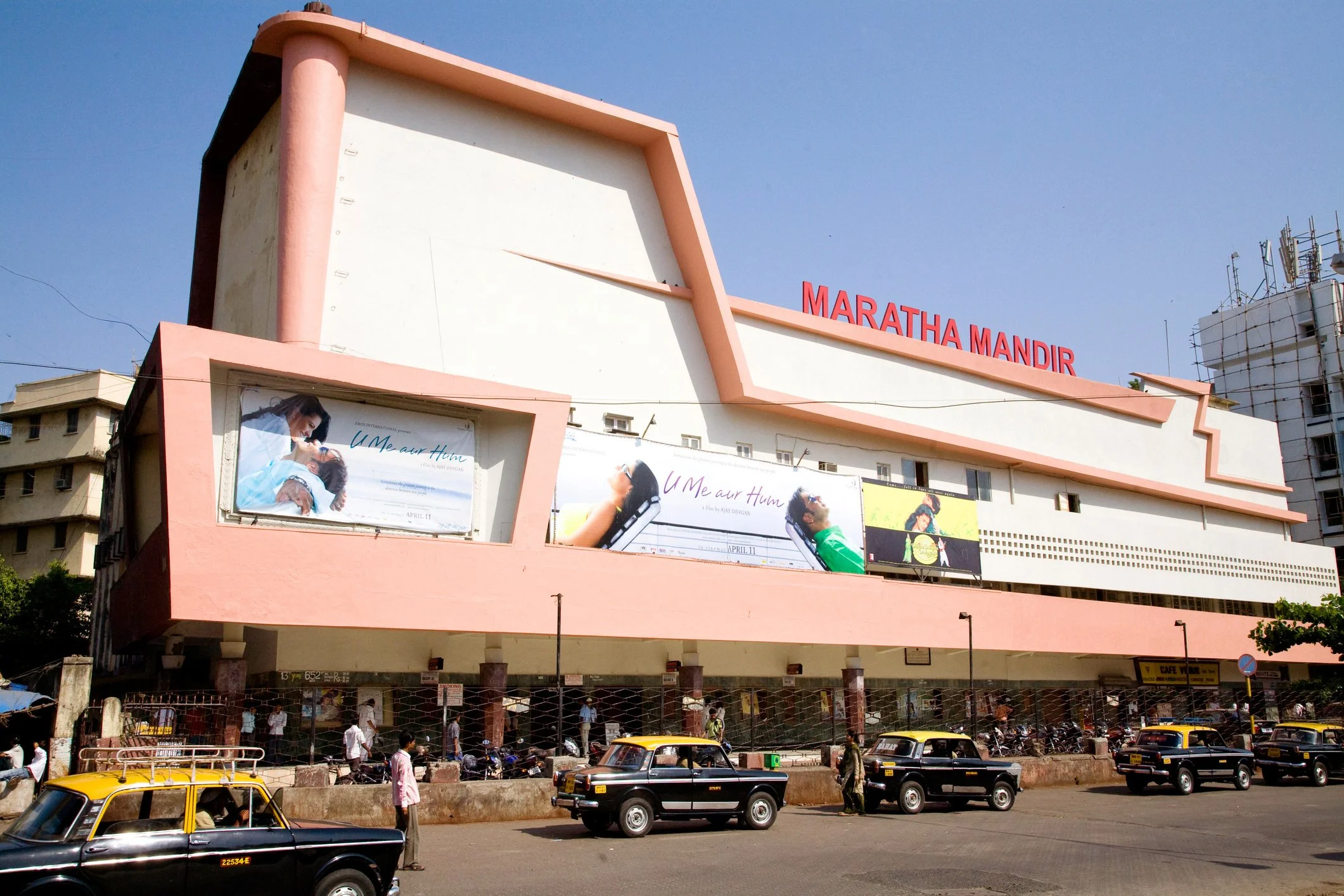
Maratha Mandir Theatre, Mumbai. Photo Credit: Dinodia Photo, Getty Images
For deeper context, the National Museum of Indian Cinema on Peddar Road traces the industry's history across two buildings: Gulshan Mahal, a 19th-century Victorian-Gothic bungalow, and a modern glass gallery building. Exhibits cover the Lumière screenings, Raja Harishchandra, the arrival of sound, and the technology behind modern filmmaking. Evenings belong to the Bandstand promenade, where the sea air, the lights of the Sea Link, and the steady stream of fans outside Mannat show how thoroughly film culture runs through the city's public life.
A City Written for the Screen
Mumbai rewards travelers who arrive with an appreciation for its cinematic history. From the heritage halls of the Taj to the seaside promenade outside Mannat, and from Masque's mill-house dining room to a three-decade matinee at Maratha Mandir, the city makes its film industry tangible in a way no other destination can match. It is a place where the story on screen and the story on the street have been intertwined for more than a century.
To make your journey as enjoyable as the adventure itself, trust Air Charter Guide for comprehensive, up-to-date flight booking information to keep your travel smooth and stress-free.